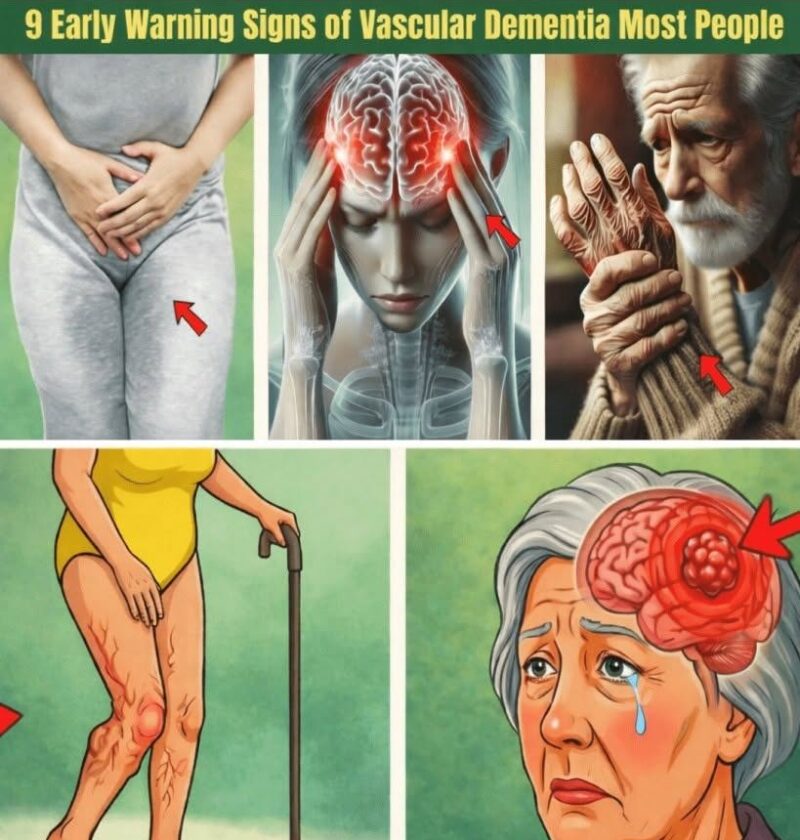
That title is also typical “fear-click” content. It mixes a real medical condition with vague, dramatic wording to make people worry—especially phrases like “before it’s too late” or “most people miss #3.”
Here’s the grounded, medical reality.
What vascular dementia actually is
Vascular dementia is a type of cognitive decline caused by reduced blood flow to the brain, often from strokes or small vessel disease.
Early signs that can be real (but are not specific on their own)
Early symptoms usually overlap with other conditions, which is why online lists can be misleading. Common early signs include:
- Slower thinking or “mental fog”
- Trouble planning or organizing tasks
- Difficulty concentrating
- Mood changes (irritability, apathy, depression)
- Subtle memory issues, often mixed with other thinking problems
- Problems with walking or balance (in some cases)
Important context people miss
- These symptoms can also come from stress, poor sleep, depression, vitamin deficiencies, thyroid issues, or normal aging
- Diagnosis requires medical evaluation, imaging, and cognitive testing
- A single symptom is not enough to suggest dementia
When to actually be concerned
It’s more concerning if symptoms:
- Start suddenly after a stroke-like event
- Rapidly worsen over weeks/months
- Clearly affect daily independence (finances, cooking, getting lost, etc.)
Bottom line
There is no “hidden #3 sign” that reliably predicts dementia. Real diagnosis is clinical, not social-media checklist-based.
If you want, I can also explain how vascular dementia differs from Alzheimer’s in a simple comparison so you can better understand what doctors look for.