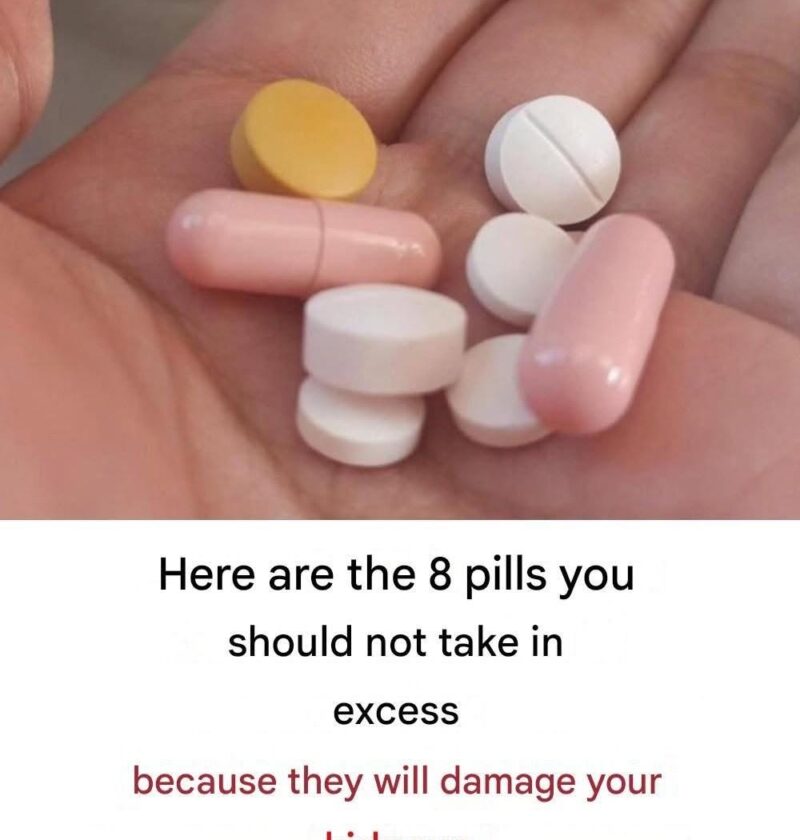
It’s not accurate to say there are “eight pills you should never take,” because most medicines are safe when used correctly and monitored. However, some medications can stress or damage the kidneys, especially in high doses, long-term use, dehydration, or in people with existing kidney disease.
Here are 8 commonly used medications/groups that can affect kidney health if misused or unmonitored:
1. NSAID painkillers
Examples: ibuprofen, diclofenac, naproxen
These can reduce blood flow to the kidneys, especially with long-term or frequent use.
2. Certain antibiotics
Examples: gentamicin, vancomycin
Used in serious infections; can be kidney-toxic if levels are too high.
3. Diuretics (“water pills”)
Examples: furosemide, hydrochlorothiazide
Can dehydrate the body and strain kidney function if not properly balanced.
4. ACE inhibitors / ARBs (blood pressure drugs)
Examples: enalapril, lisinopril, losartan
Usually kidney-protective long-term, but may temporarily affect kidney function at the start or if dehydrated.
5. Contrast dyes (used in scans)
Not pills, but important: iodinated contrast in CT scans can sometimes cause kidney injury in high-risk patients.
6. Lithium (for bipolar disorder)
Long-term use can affect kidney function and requires regular monitoring.
7. Proton pump inhibitors (acid reducers)
Examples: omeprazole, esomeprazole
Long-term use has been linked in some cases to kidney inflammation or chronic kidney issues.
8. Certain antivirals and chemotherapy drugs
Examples: acyclovir (high dose), cisplatin
Can be hard on the kidneys without proper hydration and monitoring.
⚠️ Key takeaway
Kidney damage risk usually comes from:
- High doses
- Long-term use
- Dehydration
- Existing kidney disease
- Lack of medical monitoring
🚨 When to be cautious
Talk to a doctor if you notice:
- Swelling in legs or face
- Reduced urination
- Unusual fatigue
- Nausea or confusion
If you want, I can also list early signs of kidney damage or foods that protect kidney health.