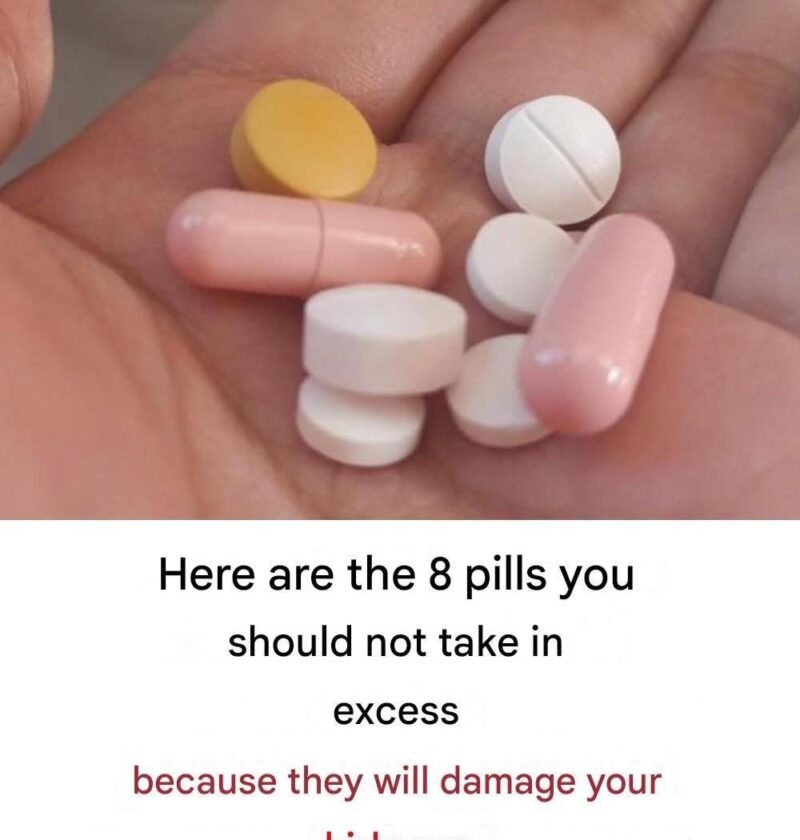
Eight Pills You Should Be Careful With Because They Can Affect Kidney HealthThe headline “Eight pills you shouldn’t take because they damage your kidneys” is often used in health articles, but the reality is more specific: some medications can affect kidney function in certain people, especially when taken at high doses, for long periods, or without medical supervision.
Here are common examples of medicines that may require kidney caution:
1. Nonsteroidal anti-inflammatory drugs (NSAIDs)
Examples include:
- Ibuprofen
- Naproxen
These pain relievers can reduce blood flow to the kidneys and may increase the risk of kidney injury, especially in people who are older, dehydrated, or have existing kidney disease.
2. Certain antibiotics
Some antibiotics can affect kidney function, particularly:
- Aminoglycosides (such as gentamicin)
- Some other antibiotics requiring dose adjustment in kidney disease
Doctors often monitor kidney function when these medicines are used.
3. Some blood pressure medicines (in certain situations)
Medicines such as ACE inhibitors and ARBs can change kidney function tests. They are often kidney-protective in many patients with conditions like diabetes, but require monitoring.
4. Diuretics (“water pills”)
These help remove excess fluid but can affect:
- Fluid balance
- Electrolytes
- Kidney function, especially if dehydration occurs
5. Certain stomach acid–reducing medicines
Some proton pump inhibitors (PPIs) have been linked in studies to kidney problems in some users, though the overall risk for an individual depends on many factors.
6. Lithium
Used for some mental health conditions, lithium can affect kidney function with long-term use and requires regular blood tests.
7. High-dose supplements and herbal products
Some supplements may contain ingredients that can stress the kidneys or interact with medicines. “Natural” does not always mean risk-free.
8. Contrast dyes used in some medical imaging
Certain contrast agents can pose kidney risks, particularly in people with existing kidney impairment. Medical teams assess risk before use.
Who is at higher risk?
Kidney-related medication problems are more likely in people who:
- Already have kidney disease
- Are older
- Have diabetes or high blood pressure
- Are dehydrated
- Take multiple medications
- Use high doses or combine medicines without guidance
How to protect your kidneys
- Take medicines exactly as prescribed.
- Avoid regularly using painkillers without discussing long-term use with a healthcare professional.
- Stay hydrated unless you have fluid restrictions.
- Ask whether kidney function tests are needed for long-term medications.
Do not stop prescribed medicines suddenly based on a general list—many of these drugs are safe and beneficial when used appropriately and monitored. If you share the specific pills you take, I can help explain their kidney-related considerations.