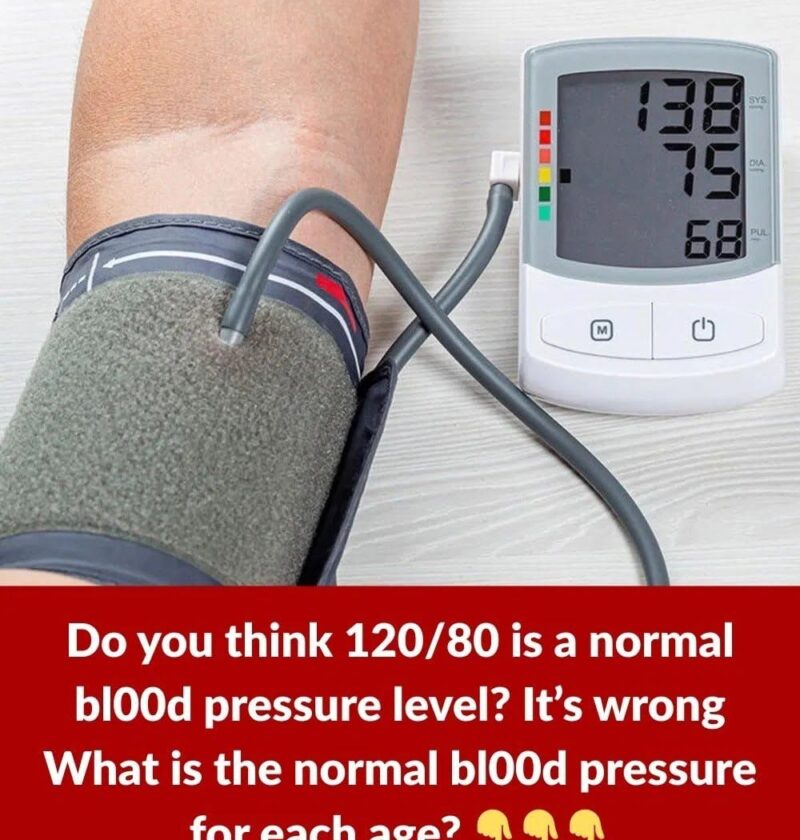
There isn’t a completely different “normal blood pressure for every age” in the way many viral posts suggest. In modern medicine, the ideal range is mostly the same for healthy adults, with only slight variations in children and older adults.
Blood pressure relates to a condition called Hypertension when it stays consistently high.
Normal Blood Pressure (General Guide)
Adults (18–59 years)
- Normal: ~120/80 mmHg
- Healthy range:
- Systolic (top number): 90–120
- Diastolic (bottom number): 60–80
Older adults (60+ years)
- Still ideally around 120/80
- Slightly higher readings (like 130/80) may be seen, but:
- Consistently ≥130/80 is now considered elevated in many guidelines
- Doctors may individualize targets depending on health
Children & Teens (approximate ranges)
Blood pressure naturally changes with growth:
- Newborns: ~60–90 / 20–60
- Toddlers (1–5 yrs): ~80–110 / 50–80
- School-age (6–12 yrs): ~90–120 / 55–80
- Teens: close to adult range (~110–120 / 60–80)
Important modern medical update
Many people still think:
- “Older people should have higher BP”
But current research shows:
- Lower, controlled BP = better heart and brain health at almost all ages
When blood pressure is concerning
- High: ≥130/80 (especially if persistent)
- Low: <90/60 (if symptoms like dizziness, weakness)
Key takeaway
There is not a completely different “normal BP per age” rule for adults. Instead:
- Children = age-based ranges
- Adults = roughly same ideal range
- Older adults = same target, sometimes adjusted individually
If you want, I can show you a simple chart of high vs low BP symptoms so you can quickly recognize when it becomes dangerous.