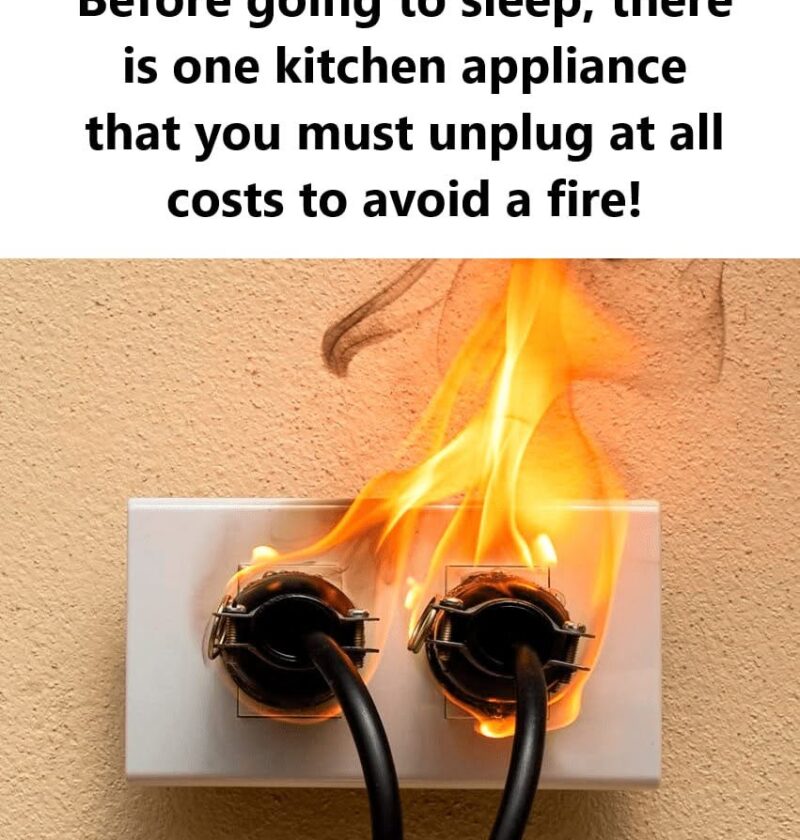
This kind of headline is usually designed to sound alarming, but the real safety advice is more specific and less dramatic.
🔌 The kitchen appliance most commonly meant
Most articles like this are referring to:
⚠️ Toaster / toaster oven
- Old crumbs inside can ignite
- Heating elements can fail
- Faulty wiring or stuck switches can cause overheating
Sometimes it also includes:
- Electric kettles (rare risk)
- Air fryers
- Microwaves (very low risk if functioning properly)
- Coffee makers (mainly older models)
🔥 Real fire risk: what matters most
House fires from kitchen appliances usually happen due to:
- Leftover food crumbs (toasters)
- Faulty wiring or damaged cords
- Cheap or unregulated appliances
- Leaving high-heat appliances running unattended
- Power surges in unstable electrical systems
The biggest real risk is not just “being plugged in,” but being faulty or left actively heating.
🧠 What safety experts actually recommend
Instead of a blanket rule, fire safety agencies generally suggest:
✔️ Good habits
- Unplug toaster/toaster oven if not in use for long periods
- Turn off and unplug appliances that heat up (when practical)
- Clean crumb trays regularly
- Check cords for damage
- Don’t overload sockets
✔️ Especially important in some homes
- Older wiring systems
- Frequent power fluctuations (common in some regions)
- Cheap or heavily used appliances
❌ What is NOT necessary
- You do NOT need to unplug your fridge or freezer every night
- You do NOT need to unplug a properly working microwave every night
- You do NOT need to unplug everything in your kitchen routinely
🧯 Real takeaway
If there is one appliance worth being cautious about, it is the:
- Toaster or Toaster oven
Not because it is inherently dangerous, but because:
- It’s small
- It gets very hot
- It is often forgotten after use
🧾 Bottom line