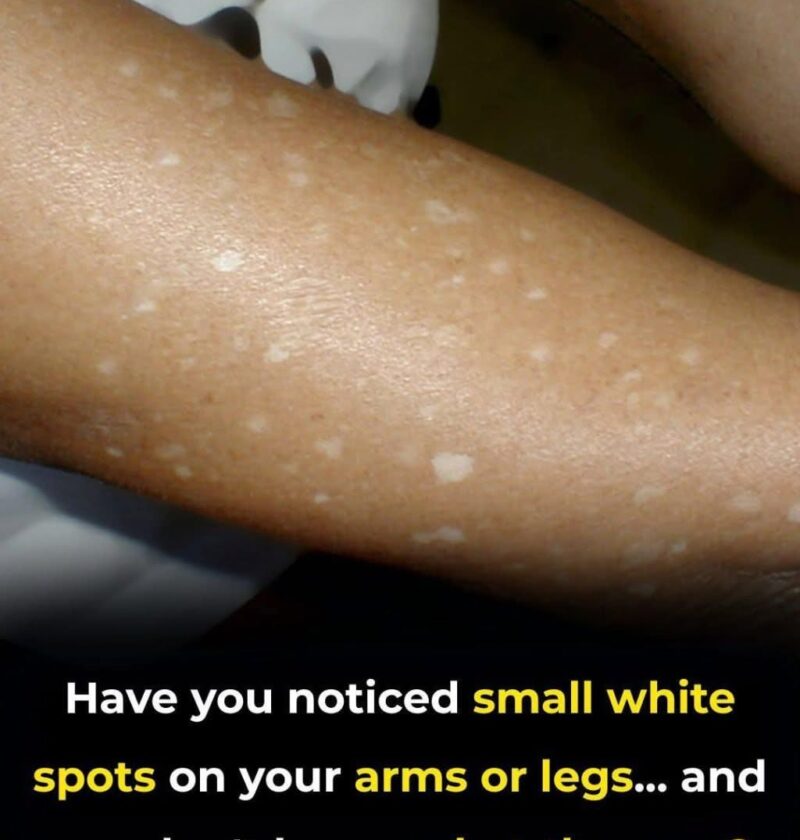
Part 1: White Spots on Skin (Arms & Legs) — What They Could Mean According to Dermatology Experts (SEO-Optimized Guide)
Understanding Small White Spots on Skin: Why They Appear and When to Pay Attention
Noticing small white spots on your arms, legs, or even face can be confusing and sometimes worrying. These spots may appear suddenly or develop gradually over time. In many cases, they are harmless, but in some situations, they can indicate underlying skin conditions that require attention.
Dermatology specialists explain that “white spots” is not a diagnosis itself—it is a visual symptom that can be linked to multiple different skin conditions. These conditions vary in severity, cause, and treatment approach.
Some causes are related to sun exposure, others to fungal infections, and some are linked to pigment loss due to immune or genetic factors. Understanding the differences is important before jumping to conclusions.
This guide breaks down the most common medically recognized reasons behind small white spots on arms and legs, how they look, and when you should consider seeing a skin specialist.
1. Idiopathic Guttate Hypomelanosis (IGH): Age and Sun-Related White Spots
One of the most common causes of small white spots on arms and legs—especially in adults—is a condition called Idiopathic Guttate Hypomelanosis (IGH).
These spots are usually:
- Small and round (2–5 mm in size)
- Flat and smooth
- White or lighter than surrounding skin
- Most common on sun-exposed areas like forearms and lower legs
IGH is strongly linked to long-term sun exposure and natural aging of the skin. Over time, ultraviolet (UV) rays can reduce melanin production in certain areas, leading to tiny patches of lighter skin.
Although IGH is harmless and not contagious, many people notice it cosmetically and become concerned. Dermatologists generally reassure patients that it does not develop into anything dangerous.
However, prevention of further spots often involves sun protection, including sunscreen and protective clothing.
2. Vitiligo: Autoimmune Loss of Skin Pigment
Another well-known cause of white patches on the skin is vitiligo, a condition in which the immune system attacks pigment-producing cells (melanocytes).
Vitiligo spots are typically:
- Larger than IGH spots
- Clearly defined with sharp borders
- White or chalk-like in appearance
- Sometimes symmetrical on both sides of the body
Unlike some other causes, vitiligo can spread over time. It may affect hands, arms, legs, face, and other body areas.
Experts believe vitiligo is linked to autoimmune activity, genetics, and environmental triggers. While it is not physically harmful or contagious, it can have a strong emotional and psychological impact due to its visible nature.
Modern treatments may include topical medications, light therapy, or immune-modulating treatments, depending on severity.
Trusted dermatology information can be found at:
3. Tinea Versicolor: A Common Fungal Skin Infection
A very common but often overlooked cause of white or light-colored patches is tinea versicolor, a fungal infection caused by yeast that naturally lives on the skin.
These patches often:
- Appear on chest, back, arms, and sometimes legs
- Look lighter or darker than surrounding skin
- May have a slightly scaly texture
- Become more noticeable after sun exposure
This condition is not dangerous or contagious in most cases, but it can spread slowly and become more visible in warm, humid climates.
It tends to affect teenagers and young adults more frequently due to increased oil production in the skin.
Treatment usually involves antifungal creams, shampoos, or oral medication in more persistent cases.
4. Sun Damage and Hypopigmentation Spots
Long-term exposure to sunlight can sometimes lead to uneven skin pigmentation. In some cases, instead of dark spots (hyperpigmentation), the skin may develop small lighter areas.
This happens when UV radiation damages melanocytes, reducing melanin production in localized spots.
These sun-related white spots are:
- More common on arms, shoulders, and legs
- Gradually appearing over time
- Usually harmless
Prevention is key, and dermatologists strongly recommend regular use of sunscreen with SPF 30 or higher to reduce further pigment changes.
5. Post-Inflammatory Hypopigmentation (After Skin Injury or Irritation)
White spots can also appear after the skin has healed from an injury, rash, acne, eczema, or irritation. This is known as post-inflammatory hypopigmentation.
It occurs when melanin production is temporarily reduced in the affected area.
These spots:
- Often match the shape of previous skin damage
- May take weeks or months to fade
- Usually improve on their own over time
This type of pigmentation change is especially common in people with darker skin tones.
6. Pityriasis Alba: Common in Children and Young Adults
Another frequent cause of light patches is pityriasis alba, a mild skin condition often associated with dry skin or eczema.
Characteristics include:
- Pale, slightly scaly patches
- Common on face, arms, and upper body
- More noticeable in summer due to tanning of surrounding skin
Although the exact cause is not fully understood, it is believed to be related to mild eczema and skin dryness.
The condition is harmless and often resolves naturally, especially with moisturizing and gentle skincare.
When Should You Be Concerned About White Spots?
Most small white spots on arms and legs are harmless, but certain signs should prompt a visit to a dermatologist:
- Rapid spreading of patches
- Large, sharply defined white areas
- Itching, scaling, or discomfort
- Family history of vitiligo or autoimmune diseases
- Changes in skin texture or color over time
A proper diagnosis usually involves a physical examination and sometimes a Wood’s lamp test or skin scraping to rule out fungal infection.
Self-diagnosis can be misleading because many skin conditions look similar in early stages.
How Dermatologists Diagnose Skin Pigmentation Changes
Skin specialists typically use:
- Visual examination
- Patient history (sun exposure, symptoms, duration)
- Wood’s lamp (UV light examination)
- Skin scraping or lab tests (if fungal infection is suspected)
Accurate diagnosis ensures the correct treatment plan and avoids unnecessary medications.
General Skin Care Tips to Prevent White Spots
While not all causes are preventable, you can reduce risk by:
- Using sunscreen daily (SPF 30 or higher)
- Avoiding excessive sun exposure
- Keeping skin moisturized
- Treating fungal infections early
- Avoiding harsh skin irritation products
Healthy skin habits play a major role in maintaining even skin tone over time.
Trusted Medical Sources
For more medically reviewed information, you can refer to:
- Mayo Clinic – Vitiligo Overview
- American Academy of Dermatology
- DermNet NZ – Skin Pigmentation Disorders
Part 2: Simple Summary – Why You See White Spots on Skin
Common Causes
- Small sun-related white spots (IGH)
- Vitiligo (loss of skin pigment due to immune activity)
- Fungal infection (tinea versicolor)
- Sun damage causing uneven pigmentation
- Skin healing after injury or irritation
- Mild eczema-related light patches (pityriasis alba)
When to See a Doctor
- Spots are spreading quickly
- Skin color is changing in large areas
- Itching, scaling, or discomfort appears