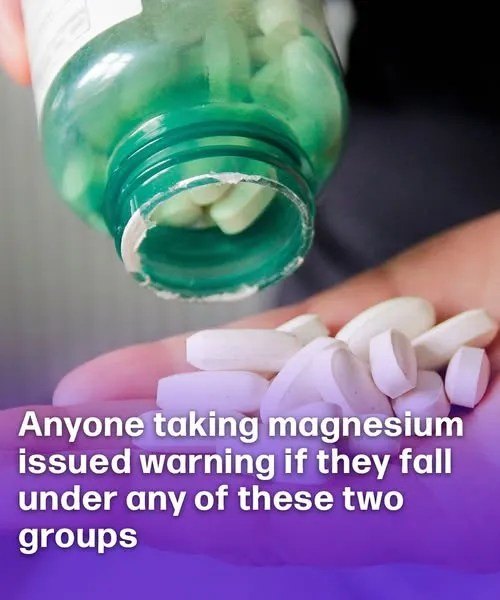
Recent warnings from health experts about magnesium supplements are mainly focused on two higher-risk groups:
- People with kidney disease or reduced kidney function
- People taking certain medications that interact with magnesium
Why the concern? While magnesium is essential for muscle, nerve, and heart function, too much supplemental magnesium can build up in the body and become dangerous — especially when the kidneys can’t clear it properly. Severe excess magnesium (hypermagnesemia) can cause low blood pressure, irregular heartbeat, breathing problems, and in rare cases cardiac arrest. (Office of Dietary Supplements)
High-risk group #1: People with kidney problems
Healthy kidneys usually remove excess magnesium through urine. But in people with chronic kidney disease, magnesium can accumulate to toxic levels. Experts say this is the most important risk group. (Office of Dietary Supplements)
Symptoms of too much magnesium may include:
- Diarrhea
- Nausea/vomiting
- Weakness
- Dizziness
- Low blood pressure
- Irregular heartbeat
- Difficulty breathing
High-risk group #2: People taking interacting medications
Magnesium supplements can interfere with or worsen effects of several drugs, including:
- Certain antibiotics
- Diuretics (“water pills”)
- Heart medications
- Proton pump inhibitors (acid reflux medicines)
- Some osteoporosis medications
In some cases, medications can either increase magnesium loss or raise magnesium levels dangerously. (Office of Dietary Supplements)
Other points experts are emphasizing
- Most people should ideally get magnesium from foods like nuts, seeds, beans, leafy greens, and whole grains.
- Supplements are not automatically harmless just because they’re sold over the counter.
- The commonly cited upper limit for magnesium from supplements is about 350 mg/day for most adults unless a doctor advises otherwise. (Office of Dietary Supplements)
- Social media trends promoting high-dose magnesium for sleep, anxiety, or “wellness” are part of why doctors are issuing new cautions. (Tyla)
For most healthy people, moderate magnesium supplementation is generally safe, but experts recommend checking with a healthcare professional first if you:
- have kidney issues,
- take prescription medications,
- are older,
- or plan to use high doses long term.