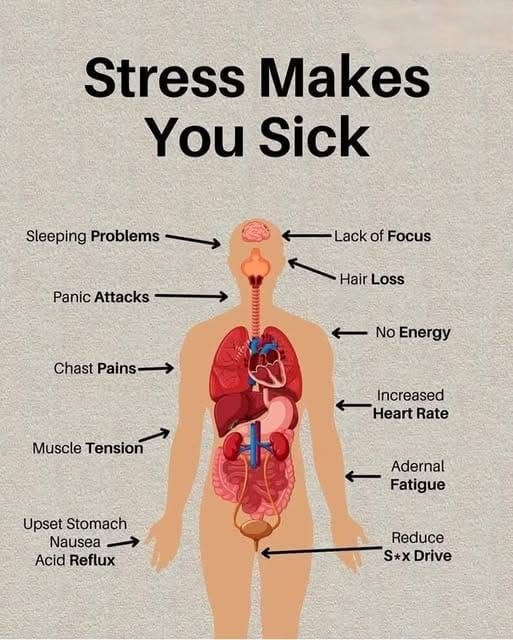
Stress is a normal body response, but when it becomes constant, it can affect both mind and body. Short-term stress can help you react to challenges, but long-term (chronic) stress can harm your health.
🧠 How stress affects your health
❤️ 1. Heart and blood pressure
Chronic stress can:
- Increase heart rate and blood pressure
- Raise risk of heart disease over time
Related to conditions like Hypertension
🧠 2. Brain and mood
Stress affects brain chemicals and can cause:
- Anxiety or irritability
- Difficulty concentrating
- Memory problems
- Sleep disturbances
Severe long-term stress can contribute to mental health conditions like Depression
🧍 3. Muscles and body pain
- Tension in neck, shoulders, and back
- Headaches
- Jaw clenching
🧬 4. Immune system
- Weaker immune response over time
- More frequent colds or infections
🍽️ 5. Digestion
- Stomach pain or cramps
- Bloating
- Changes in appetite (overeating or loss of appetite)
🧘 Ways to manage stress
🌬️ 1. Breathing techniques
- Slow deep breathing lowers stress hormones
- Example: inhale 4 seconds, hold 4, exhale 6–8
🚶 2. Physical activity
- Walking, stretching, or light exercise reduces stress chemicals
😴 3. Sleep hygiene
- Regular sleep schedule
- Avoid screens before bed
🧠 4. Limit overthinking triggers
- Reduce excessive news/social media
- Break problems into small steps
🤝 5. Social support
- Talking to friends or family reduces emotional load
🥗 6. Healthy lifestyle
- Balanced diet
- Reduce caffeine and sugar overload
🚨 When stress needs attention
Seek help if stress causes:
- Constant anxiety or panic
- Persistent sleep problems
- Physical symptoms (chest pain, severe headaches)
- Difficulty functioning daily
🧠 Bottom line
Stress affects nearly every system in the body, but it is manageable. The key is combining relaxation techniques, healthy habits, and support when needed.
If you want, I can give you a simple daily anti-stress routine (5–10 minutes) that actually helps calm the nervous system.