1. Read the Label
- Look for ingredients that say 100% honey.
- Avoid products that list added sweeteners such as corn syrup, glucose syrup, or sugar syrup.
- Be cautious of labels with vague terms like “honey-flavored” or “honey blend.”
2. The Taste and Aroma Test
Real honey often has:
- A natural floral or plant-like aroma
- A complex taste that may change depending on the flower source
- A lingering flavor after swallowing
Highly processed or syrup-based products may taste mostly like plain sugar.
3. The Crystallization Test
Pure honey often crystallizes over time, especially varieties with more glucose. Crystallization does not mean honey is fake or spoiled.
- Real honey may become thick, grainy, or solid.
- Some processed honeys stay liquid longer because they have been filtered or heated.
4. The Water Test (Not a Proof Test)
Some people place a spoonful of honey into water:
- Pure honey may sink slowly and form a lump before dissolving.
- Adulterated honey may dissolve faster.
However, this test is not reliable enough to confirm authenticity because honey composition varies.
5. The Thumb Test (Popular but Not Reliable)
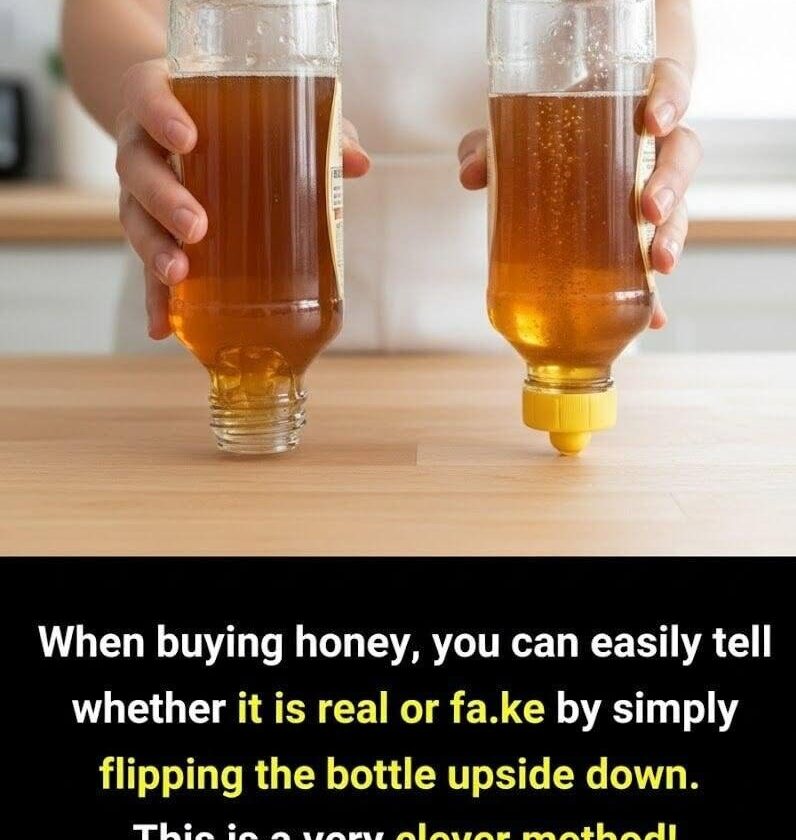
A common internet test says real honey will stay on your thumb without spreading. In reality, thickness depends on temperature, moisture content, and honey type, so this test can be misleading.
Best Way to Know
For guaranteed results, choose honey from a trusted beekeeper or brand and look for quality testing or certification when available.
Tip: If your honey crystallizes, don’t throw it away. Place the jar in warm water and gently heat it until it becomes liquid again. Avoid overheating, as high temperatures can affect flavor and quality.