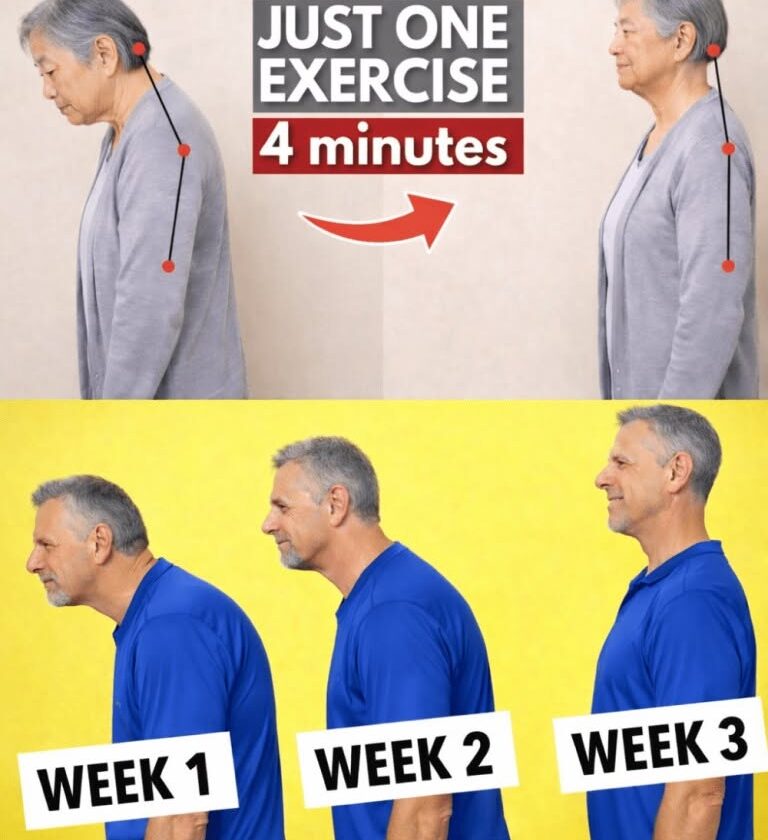
How to Improve Forward Head Posture After 60: A Gentle 4-Minute Routine
Forward head posture (sometimes called “text neck”) happens when the head sits farther forward than the shoulders. It can contribute to neck stiffness, upper back tension, and discomfort. While a few minutes of exercises won’t permanently “fix” posture overnight, a consistent routine can help improve mobility, strength, and body awareness.
4-Minute Gentle Routine
1. Chin Tucks (1 minute)
Purpose: Strengthens deep neck muscles.
- Sit or stand tall with shoulders relaxed.
- Look straight ahead.
- Gently draw your chin straight backward, as if making a “double chin.”
- Hold for 3–5 seconds, then relax.
- Repeat 10–15 times.
Do not tilt your head down—this is a backward glide, not a nod.
2. Chest Stretch (1 minute)
Purpose: Opens tight chest muscles that can pull shoulders forward.
- Stand in a doorway.
- Place your forearms on the door frame.
- Step forward gently until you feel a stretch across your chest.
- Hold for 20–30 seconds.
- Repeat twice.
3. Shoulder Blade Squeezes (1 minute)
Purpose: Strengthens upper back muscles.
- Sit or stand upright.
- Pull your shoulder blades gently together and downward.
- Hold for 5 seconds.
- Relax and repeat 10–12 times.
4. Neck and Upper Back Mobility (1 minute)
Purpose: Reduces stiffness.
- Slowly turn your head left and right.
- Gently look up and down within a comfortable range.
- Roll your shoulders backward several times.
Avoid forcing any movement or stretching into pain.
Daily Habits That Help
- Raise phones and screens closer to eye level.
- Take movement breaks during long periods of sitting.
- Strengthen your upper back and core regularly.
- Use a pillow that keeps your neck in a neutral position.
If you have arm numbness, tingling, weakness, severe neck pain, dizziness, or symptoms that are getting worse, it’s a good idea to consult a healthcare professional or physical therapist for an assessment.