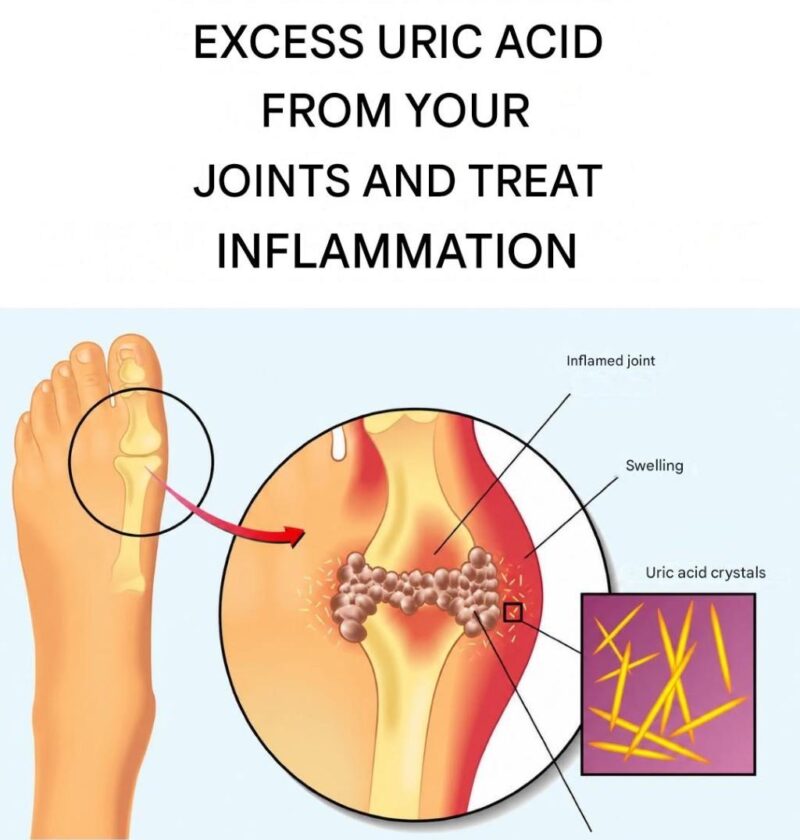
High uric acid can lead to Gout, which commonly causes sudden joint pain, swelling, warmth, and redness — often in the big toe, ankle, knee, or fingers. Treatment focuses on:
- lowering uric acid levels
- reducing inflammation during flares
- preventing future attacks
What helps lower uric acid
Drink more water
Aim for steady hydration throughout the day. Good hydration helps the kidneys flush out uric acid.
Reduce high-purine foods
Foods that commonly raise uric acid include:
- organ meats (liver, kidney)
- red meat in excess
- sardines, anchovies, shellfish
- sugary drinks with fructose
- alcohol, especially beer
Eat more uric-acid-friendly foods
Helpful choices include:
- low-fat dairy
- cherries
- vegetables
- whole grains
- citrus fruits
- coffee in moderation
Lose excess weight gradually
Rapid weight loss can temporarily increase uric acid, so gradual weight reduction is safer.
Manage related conditions
High blood pressure, kidney disease, obesity, and diabetes can worsen uric acid control.
Medicines commonly used
For joint inflammation and pain during a flare
Doctors may use:
- Ibuprofen or other NSAIDs
- Colchicine
- Prednisone
To lower uric acid long term
If attacks are frequent or uric acid stays high:
- Allopurinol
- Febuxostat
These should be prescribed and monitored by a doctor, especially if you have kidney problems.
Things that can worsen gout/inflammation
- dehydration
- binge eating
- alcohol
- high-sugar drinks
- some medicines like certain diuretics (“water pills”)
When to see a doctor urgently
Get medical care if you have:
- fever with a swollen joint
- inability to walk
- severe redness spreading around a joint
- first-time sudden severe joint pain
- kidney stone symptoms (side pain, blood in urine)