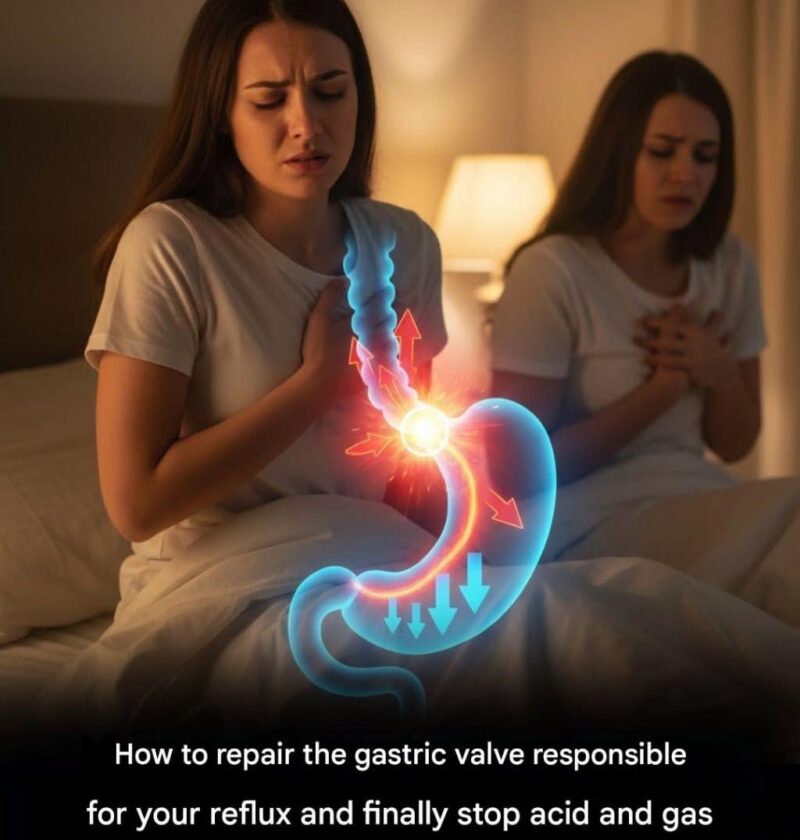
Reflux usually involves weakness or poor function of the lower esophageal sphincter (LES)—a ring of muscle between the esophagus and stomach. When it doesn’t close properly, acid and sometimes gas can move upward, causing Gastroesophageal Reflux Disease.
Can you “repair” the sphincter?
There is no simple natural way to permanently repair or tighten the LES at home in a direct mechanical sense. However, symptoms can often be significantly improved—and in some cases controlled—by reducing pressure on the valve and improving how it functions.
What actually helps (evidence-based)
1. Lifestyle changes (first-line treatment)
These reduce pressure on the LES:
- Eat smaller meals (avoid overfilling the stomach)
- Avoid lying down for 2–3 hours after eating
- Elevate the head of the bed (not just pillows)
- Lose excess abdominal weight if applicable
- Avoid tight clothing around the waist
2. Food and trigger management
Common triggers vary, but often include:
- Fatty or fried foods
- Chocolate
- Coffee or caffeine
- Spicy foods
- Tomato-based foods
- Mint
- Carbonated drinks
3. Medications (when needed)
- Antacids (quick relief)
- H2 blockers (reduce acid production)
- Proton pump inhibitors (strong acid suppression)
These don’t “fix” the sphincter, but they reduce irritation and allow healing.
4. For gas regurgitation / bloating
- Eat slowly and avoid swallowing air (no gum, no smoking, avoid fizzy drinks)
- Check for lactose intolerance or food sensitivities
- Treat constipation if present
5. Medical procedures (for severe cases)
If symptoms are persistent and confirmed GERD:
- Fundoplication surgery (tightens LES)
- LINX device (magnetic ring around LES)
Important reality check
The LES is a muscle—not a broken part you can “rebuild overnight.” Most improvement comes from reducing pressure, acid exposure, and trigger foods, not “repairing” it directly.
When to see a doctor urgently
- Difficulty swallowing
- Weight loss
- Vomiting blood or black stools
- Persistent symptoms despite treatment
If you want, tell me your symptoms (burning, bloating, throat issues, timing), and I can help narrow down whether it’s typical GERD or something like functional dyspepsia or gas trapping.