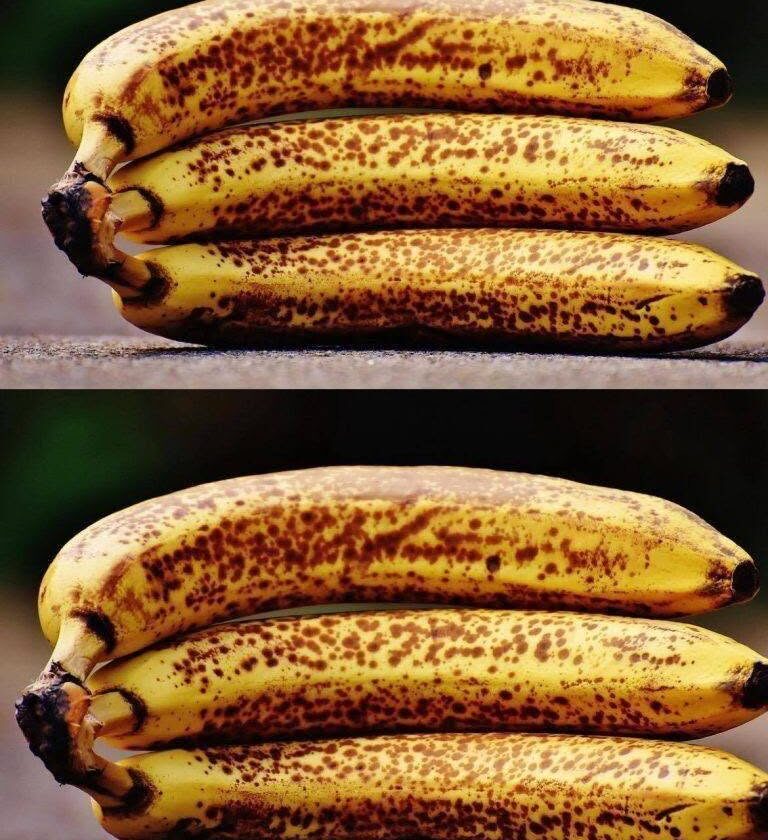
Bananas with black spots are just very ripe bananas—not spoiled. The spots form as starch breaks down into sugars, and the fruit becomes softer and sweeter. Eating them daily is generally safe, but your body may notice a few consistent effects.
1. More quick energy
Spotted bananas have more simple sugars and less starch, so they digest quickly. That can give you a fast energy boost, especially useful before exercise—but it may also lead to quicker energy “crashes” if eaten alone.
2. Easier digestion
They’re softer and easier for your stomach to break down. Many people find them gentler on digestion, especially compared to firmer bananas.
3. Higher sugar impact on blood
Because starch converts into sugar, overripe bananas can cause a slightly higher blood sugar spike compared to less ripe ones. This matters more if you have diabetes or insulin resistance.
4. Lower resistant starch benefits
Unripe bananas contain more resistant starch, which feeds beneficial gut bacteria. As they ripen, that decreases—so daily spotted bananas may provide less gut-prebiotic benefit than greener ones.
5. Slight increase in antioxidants
As bananas develop dark spots, they produce more antioxidant compounds, which may help your body fight oxidative stress, though the effect is modest.
6. Same core nutrients
You still get key nutrients like potassium, vitamin B6, and vitamin C from a banana, regardless of ripeness.