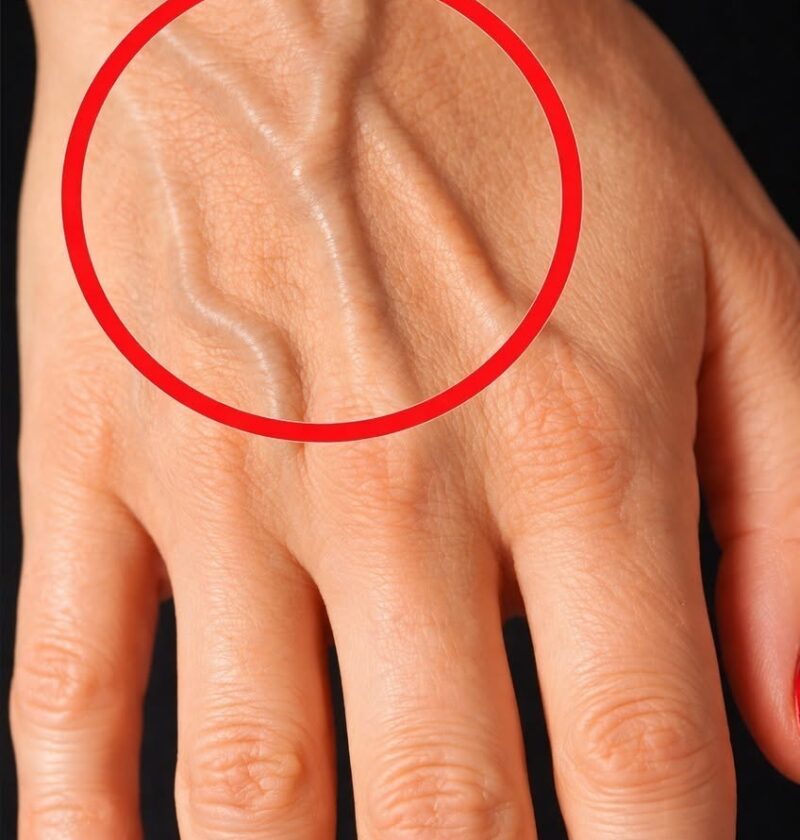
The statement “If your veins are visible, it means you are…” is misleading because visible veins can be completely normal and do not point to a single health condition.
Common reasons veins are more visible include:
- Low body fat, making veins easier to see.
- Thin or fair skin, especially as people age.
- Exercise, which temporarily enlarges veins due to increased blood flow.
- Warm weather, which causes veins to dilate.
- Genetics, which influence vein size and skin thickness.
Sometimes visible veins can be related to a medical condition, such as:
- Varicose veins, which are enlarged, twisted veins that may cause aching, heaviness, swelling, or itching.
- Less commonly, other vein or circulation problems.
Visible veins do not automatically mean you have poor circulation, high blood pressure, dehydration, or another specific disease.
You should seek medical evaluation if your visible veins are accompanied by:
- pain, swelling, or warmth,
- skin discoloration or ulcers,
- sudden swelling of one leg,
- a new, hard, tender vein.
Otherwise, simply having visible veins—especially on the hands, arms, or feet—is often a normal variation.