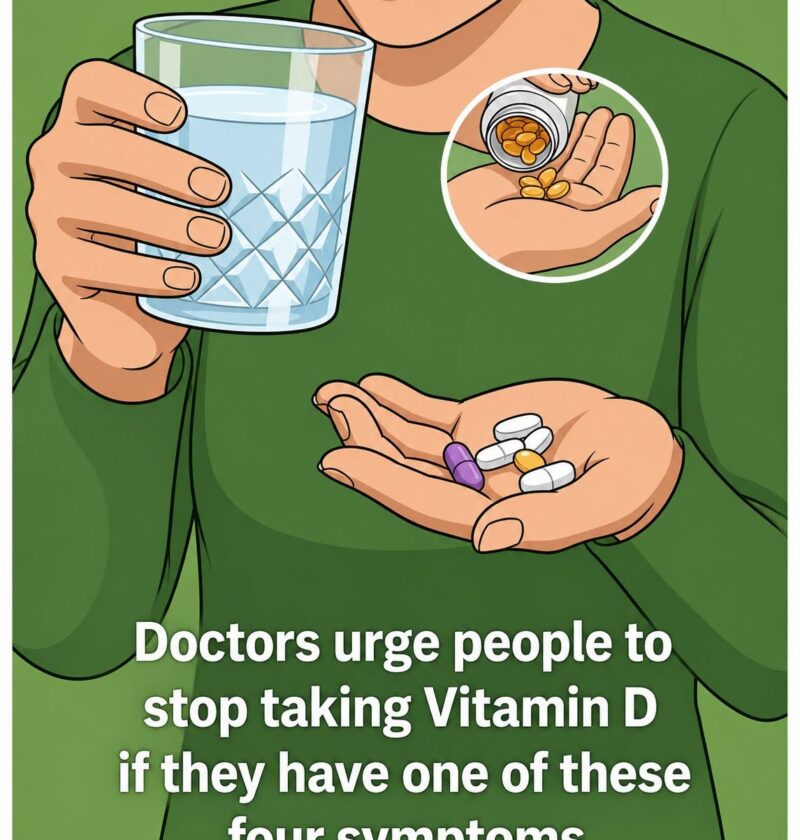
That headline is too alarming and misleading. Most people should not stop vitamin D automatically because of a symptom; vitamin D is important for bone health and deficiency treatment. Problems usually occur from excessive doses, prolonged overuse, or certain medical conditions.
A more accurate headline would be:
- Vitamin D Warning Signs: 4 Symptoms That May Mean Your Dose Is Too High
- Taking Vitamin D? When to Talk to Your Doctor
- Too Much Vitamin D Can Be Harmful: Signs to Watch For
- Vitamin D Supplements: Benefits, Risks, and Safe Use
Symptoms That May Suggest Too Much Vitamin D
Excess vitamin D can raise calcium levels in the blood, a condition called Hypercalcemia. Possible symptoms include:
1. Nausea or Vomiting
High calcium levels can upset the digestive system and reduce appetite.
2. Excessive Thirst and Frequent Urination
Elevated calcium can affect how the kidneys handle fluids.
3. Weakness or Unusual Fatigue
Too much vitamin D may contribute to muscle weakness and feeling unwell.
4. Confusion or Irregular Heartbeat
Severe cases of high calcium can affect the nervous system and heart rhythm.
Who Should Be Especially Careful?
Speak with a healthcare professional before taking high-dose vitamin D supplements if you have:
- Kidney disease
- A history of kidney stones
- Certain hormone-related conditions
- Conditions that affect calcium levels
Important Note
- Do not stop a prescribed vitamin D treatment without discussing it with your healthcare provider.
- Vitamin D toxicity is usually linked to excessive supplementation, not normal dietary intake or recommended doses.
- If you are taking vitamin D, follow the dose recommended by your doctor or based on your blood test results.
Key takeaway: Vitamin D is beneficial when used appropriately, but very high doses can be harmful. The right approach is to recognize warning signs and use supplements safely—not to stop vitamin D automatically.