⚠️ Important Warning: When to Stop or Reassess Vitamin D Supplements
Vitamin D is essential for bone health, calcium balance, and immune function. However, taking too much—especially high-dose supplements without medical supervision—can lead to vitamin D toxicity (hypervitaminosis D).
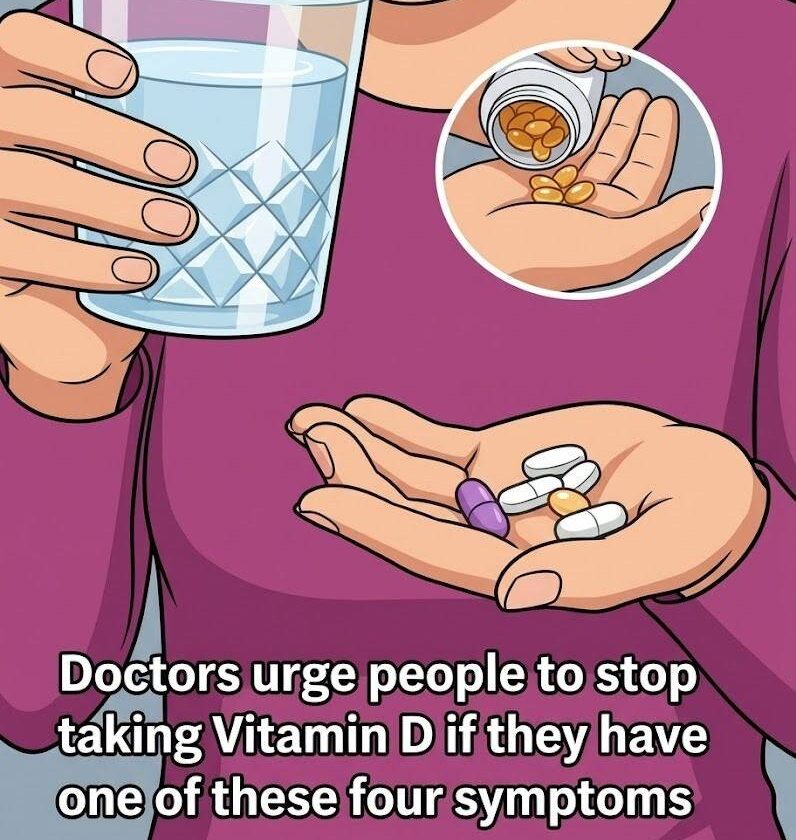
Doctors don’t usually say “stop immediately” for everyone, but they do advise stopping and seeking medical review if certain warning symptoms appear, because they may indicate elevated calcium levels in the blood.
🚨 4 Symptoms That May Signal Excess Vitamin D
1. Persistent Nausea and Vomiting
One of the earliest warning signs of too much vitamin D is gastrointestinal upset.
You may notice:
- Loss of appetite
- Feeling sick after meals
- Repeated vomiting
- Stomach discomfort
This can happen because excess vitamin D raises calcium levels, irritating the digestive system.
2. Extreme Thirst and Frequent Urination
High vitamin D can lead to high calcium levels (hypercalcemia), which affects kidney function.
Symptoms include:
- Constant thirst
- Drinking more water than usual
- Frequent urination
- Dehydration feeling
This is an important signal that the kidneys are under stress.
3. Weakness, Fatigue, and Muscle Pain
Too much vitamin D can disrupt normal muscle and nerve function.
Common signs:
- General weakness
- Muscle aches
- Low energy
- Difficulty focusing
These symptoms often develop gradually and are commonly overlooked.
4. Confusion or Mental Fog
In more serious cases, high calcium levels can affect brain function.
Possible symptoms:
- Confusion
- Difficulty concentrating
- Irritability
- Dizziness
Severe cases require immediate medical attention.
🧠 Why This Happens
Excess Vitamin D increases calcium absorption in the body. Too much calcium can affect:
- Kidneys
- Heart rhythm
- Nervous system
- Digestive tract
This condition is called Hypercalcemia.
⚠️ Important Reality Check
Vitamin D toxicity is rare, and usually occurs due to:
- Very high-dose supplements over time
- Self-medication without blood testing
- Taking multiple vitamin products together
It does not usually come from sunlight or normal diet intake.
🩺 What You Should Do If Symptoms Appear
If you experience these symptoms:
- Stop high-dose vitamin D supplements
- Consult a healthcare provider
- Get blood tests (Vitamin D and calcium levels)
- Avoid self-adjusting medication long-term
📌 Key Takeaway
Vitamin D is beneficial when used correctly, but excessive intake may lead to Hypercalcemia, causing symptoms like nausea, thirst, fatigue, and confusion.
The safest approach is measured supplementation under medical guidance, not long-term high-dose use without testing.