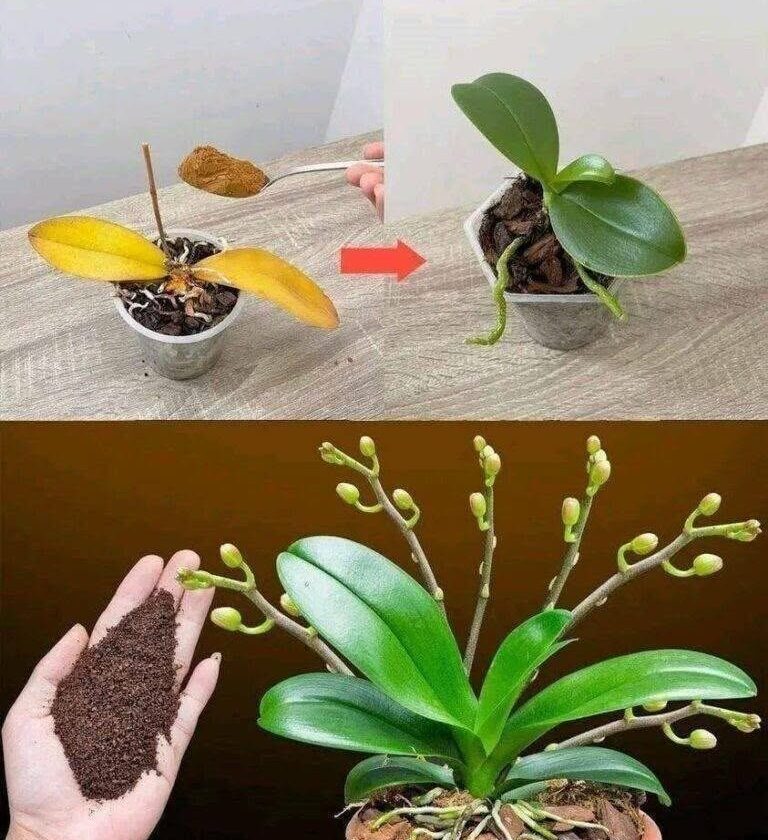
The claim that “just a teaspoon makes an orchid miraculously bloom with lots of flowers” is a common gardening tip, but there is no magic ingredient that can force an orchid to bloom instantly. Orchids bloom based on several factors, including light, temperature changes, watering, nutrients, and the plant’s natural growth cycle.
That said, a “teaspoon” often mentioned in orchid tips is usually one of these:
- Balanced orchid fertilizer (used at the correct dilution): Orchids can benefit from nutrients during active growth, especially fertilizers formulated for orchids.
- Cinnamon (sometimes suggested): It may help protect cut surfaces because it has mild antifungal properties, but it is not a bloom booster.
- Epsom salt (magnesium sulfate): Sometimes recommended, but orchids do not generally need it unless there is a specific deficiency.
- Rice water or other kitchen remedies: Popular online, but evidence for reliably increasing blooms is limited.
For encouraging an orchid (such as a Phalaenopsis) to flower again, the practices with the strongest support are:
- Give bright, indirect light (avoid harsh midday sun).
- Water only when the potting medium is partly dry—overwatering is one of the most common causes of orchid problems.
- Use a proper orchid fertilizer at a weak concentration during active growth.
- Provide a temperature difference between day and night (many orchids respond to slightly cooler nights).
- Avoid cutting healthy green flower spikes too early, as some orchids can rebloom from them.
If you tell me what the “teaspoon” ingredient is (sugar, baking soda, cinnamon, fertilizer, etc.), I can explain whether it actually helps or is just a viral gardening myth.