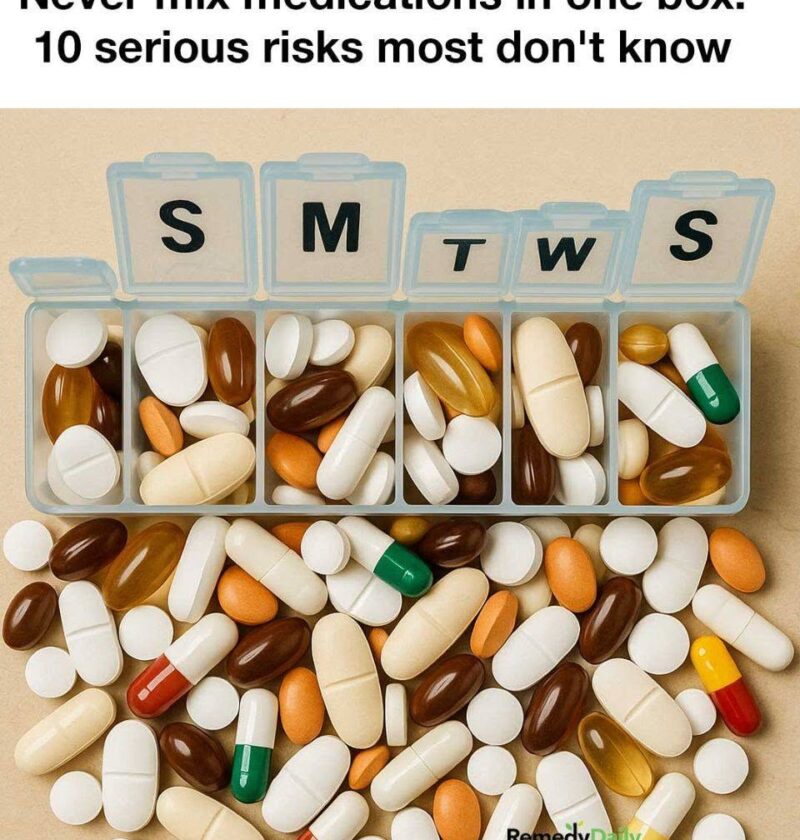
That headline is partly sensational, but the core advice is actually correct: mixing multiple medicines in one unlabelled box can be risky, especially for older adults or people taking long-term treatment.
Here are 10 real risks of mixing medications together without proper labeling or separation:
💊 10 serious risks of mixing medications in one box
1. Taking the wrong medicine by mistake
- Pills can look similar
- Leads to accidental overdose or missed treatment
2. Double dosing
- You may forget you already took a dose
- Taking it again can cause toxicity
3. Dangerous drug interactions
- Some medicines can interact badly when taken incorrectly or confused
- Can affect heart, blood pressure, or brain function
4. Skipping important doses
- Confusion leads to missed medications
- Can worsen chronic diseases like diabetes or hypertension
5. Wrong timing of medication
- Some pills must be taken before food, others after
- Mixing leads to reduced effectiveness
6. Increased side effects
- Incorrect combinations or timing may increase dizziness, nausea, or weakness
7. Risk for elderly patients
- Memory issues increase chance of mistakes
- Can lead to serious complications
8. Emergency confusion
- In case of illness, doctors can’t identify what was taken
- Delays treatment in emergencies
9. Expired medicine mixing
- Old and new tablets get mixed
- Expired drugs may lose effect or become unsafe
10. Loss of treatment control
- Doctors cannot track adherence properly
- Makes disease management harder
🧠 Why this happens
People often mix medicines to:
- Save space
- Simplify routine
- Travel convenience
But without labeling, it creates risk.