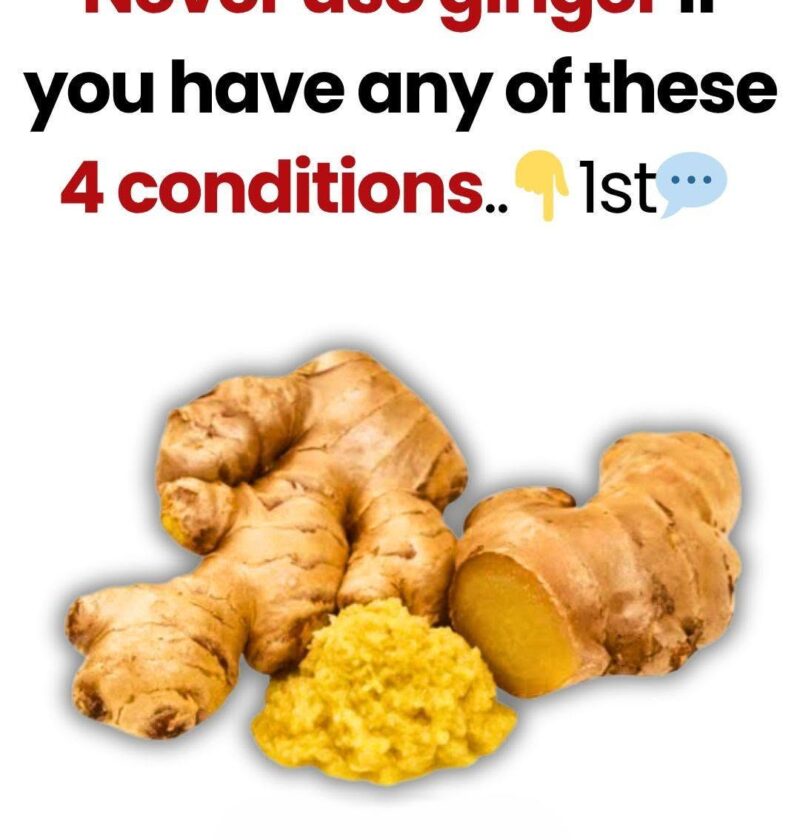
That kind of headline is another fear-based exaggeration. Ginger isn’t dangerous for most people, but it can interact with certain conditions or medications in specific situations.
Here’s the realistic, evidence-based version:
🌿 Ginger (ginger) — when to be careful
Ginger is generally safe in normal food amounts and is widely used for nausea, digestion, and mild inflammation. Problems mainly come from high doses (supplements/extracts), not cooking use.
⚠️ Conditions where caution is needed
🩸 1. Bleeding disorders or blood-thinning medication
Ginger may mildly reduce blood clotting.
- Risk increases if you have a bleeding disorder
- Or take medicines like warfarin, aspirin, or other anticoagulants
🤰 2. Pregnancy (high-dose use)
- Food amounts are usually safe
- High-dose supplements should be avoided unless advised by a doctor
- Sometimes used for morning sickness, but dose matters
💊 3. Before surgery
- Because of its mild blood-thinning effect
- Doctors often recommend stopping supplements 1–2 weeks before surgery
🧠 4. Gallbladder issues (in some cases)
- May increase bile flow
- Can worsen symptoms in people with gallstones (not everyone)
💉 5. Diabetes medication users
- Ginger may slightly lower blood sugar
- Could enhance effects of diabetes drugs → risk of low sugar if not monitored
🧠 Important reality check
- For most healthy people: ginger is safe and beneficial
- Problems are rare and dose-dependent
- Food use (tea, cooking) is generally not risky
🚨 Bottom line
The “never use ginger” claim is false. A more accurate statement would be:
“Ginger is safe for most people, but high-dose supplements may need caution in certain medical conditions.”
If you want, I can list:
- Safe daily amount of ginger
- Benefits backed by research
- Or side effects of overuse (like heartburn or stomach irritation)