New Advances in Colon Cancer Screening – Are We Moving Beyond Traditional Colonoscopy?
Understanding the Claim: “Colonoscopy Will No Longer Be Invasive”
You may have seen headlines suggesting that colonoscopy will no longer be an invasive examination. This type of statement is often used in social media posts to attract attention, but it can be misleading without proper medical context.
In reality, traditional colonoscopy is still an invasive medical procedure, but modern medicine is rapidly developing less invasive and non-invasive alternatives for colon cancer screening and intestinal health evaluation.
So instead of saying colonoscopy is disappearing, the correct interpretation is:
Medical science is expanding screening options so that not everyone will need a traditional invasive colonoscopy in every case.
What Is a Traditional Colonoscopy?
A colonoscopy is a diagnostic medical procedure used to examine the inner lining of the large intestine (colon and rectum).
During the procedure:
- A flexible tube with a camera (colonoscope) is inserted through the rectum
- The doctor visually inspects the colon for polyps, inflammation, or cancer
- Sedation is often given to reduce discomfort
- It allows both diagnosis and removal of polyps in one procedure
Why it is considered invasive:
- It involves internal insertion of a medical instrument
- It requires bowel preparation (strong laxatives)
- Sedation or anesthesia is commonly used
- There may be mild discomfort or recovery time afterward
Despite this, it remains the gold standard for detecting colon cancer early.
Why Colonoscopy Is Still Important Today
Even with newer technologies, colonoscopy is still widely used because it offers:
1. Direct Visual Inspection
Doctors can see the colon lining in real time.
2. Immediate Polyp Removal
Pre-cancerous growths can be removed during the same procedure.
3. High Diagnostic Accuracy
It is still one of the most accurate methods for detecting:
- Colorectal cancer
- Polyps
- Internal bleeding
- Inflammatory bowel disease
New Trend: Less Invasive Colon Cancer Screening Methods
Modern medical research is focused on developing comfortable, non-invasive, and early-detection screening tools.
These methods do not replace colonoscopy completely, but they can reduce how often it is needed.
1. Stool-Based Testing (FIT and DNA Tests)
One of the most important innovations is stool-based screening.
FIT Test (Fecal Immunochemical Test)
- Detects hidden blood in stool
- Simple at-home sample collection
- No preparation or discomfort
Stool DNA Test
- Detects abnormal DNA changes in stool
- Can identify early signs of cancer or polyps
Advantages:
- Non-invasive
- Easy to perform at home
- Useful for routine screening
Limitations:
- If results are positive, a colonoscopy is still required
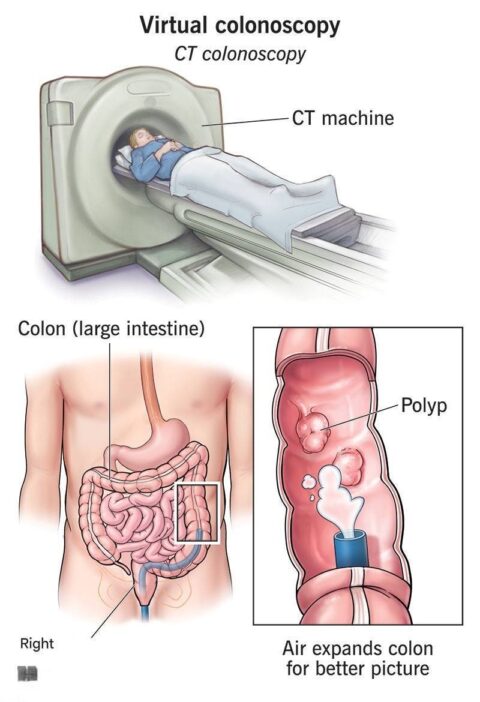
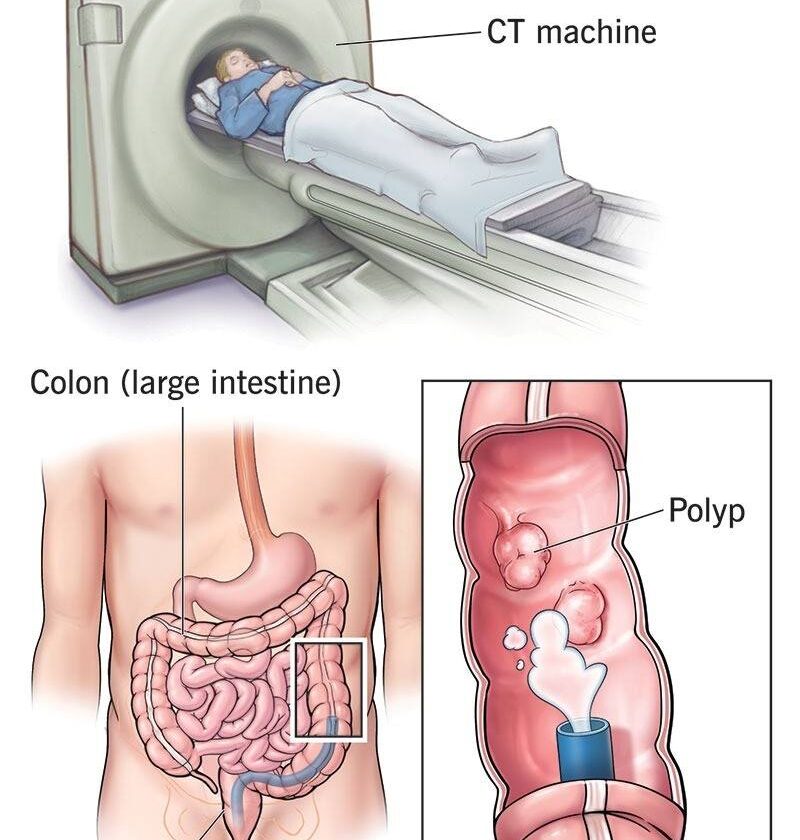
2. Virtual Colonoscopy (CT Colonography)
A major advancement in imaging technology is CT colonography, also called virtual colonoscopy.
How it works:
- A CT scan is used to create detailed images of the colon
- No camera is inserted deep into the intestine
- Air or gas is used to expand the colon slightly for imaging
Benefits:
- Less invasive than traditional colonoscopy
- No sedation required
- Faster recovery time
Limitations:
- If abnormalities are found, a traditional colonoscopy is still needed
- Small polyps may be harder to detect
3. Capsule Endoscopy (Swallowable Camera)
One of the most innovative technologies is capsule endoscopy.
What it is:
- A small pill-sized camera is swallowed
- It travels through the digestive tract naturally
- It captures thousands of images
Advantages:
- Completely non-invasive
- No sedation or tubes
- Comfortable for patients
Limitations:
- Cannot remove polyps
- Mainly used for small intestine imaging, not full colon replacement yet
4. Blood-Based Screening (Emerging Technology)
Research is ongoing into liquid biopsy and blood tests for cancer detection.
These tests aim to detect:
- Cancer-related DNA fragments
- Biomarkers of early tumor development
Benefits:
- Simple blood draw
- No digestive preparation
Current limitation:
- Still under development and not a full replacement for colonoscopy
So, Will Colonoscopy Become Non-Invasive?
The correct scientific answer is:
- Colonoscopy itself is not becoming non-invasive
- Instead, new screening methods are reducing how often invasive colonoscopy is required
- Traditional colonoscopy remains essential for confirmation and treatment
So the headline is partially misleading but based on real technological progress.
Future of Colon Cancer Screening
The future of gastrointestinal diagnostics is moving toward:
- Early detection using non-invasive tools
- Artificial intelligence-assisted imaging
- Personalized screening schedules
- Combination of stool, blood, and imaging tests
This means patients may only need a colonoscopy when:
- A non-invasive test shows abnormal results
- High-risk conditions are suspected
- Treatment like polyp removal is required
Key Takeaway
Colonoscopy is still an invasive but highly important medical procedure. However, modern medicine is creating safer, more comfortable screening alternatives that may reduce the need for frequent invasive examinations.
The real breakthrough is not eliminating colonoscopy—it is making early detection easier, faster, and less uncomfortable for patients.
Part 2: Simple Overview of Modern Colon Screening Options
1. Stool Test (FIT)
- Collect stool sample at home
- Send to lab for blood detection
- No preparation required
2. CT Colonography
- Hospital-based scan
- Non-invasive imaging test
- Used when further evaluation is needed
3. Capsule Camera Test
- Swallow a small camera capsule
- Takes internal digestive images
- Naturally exits the body
4. Traditional Colonoscopy (Still Needed Sometimes)
- Direct internal examination
- Used for diagnosis + treatment
Important Note:
If you have symptoms like:
- Persistent abdominal pain
- Blood in stool
- Unexplained weight loss
- Changes in bowel habits
You should consult a healthcare professional immediately.