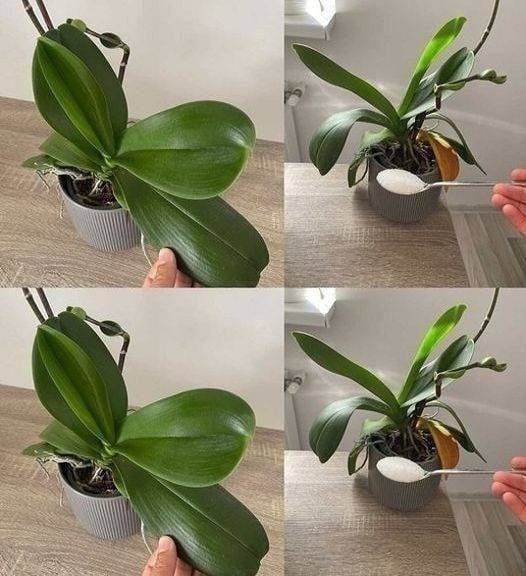
That’s plant-care clickbait, not real horticulture advice.
🌸 About orchids and “one tablespoon magic”
Orchids (especially Orchidaceae) do not bloom continuously because of a single spoon of fertilizer.
Flowering depends on:
- Light (bright, indirect light is crucial)
- Temperature changes (often triggers blooming)
- Proper watering cycle
- Healthy roots and potting medium
- Balanced fertilization over time
🧪 The truth about “1 tablespoon fertilizer hacks”
These posts usually refer to things like:
- Banana water
- Rice water
- Milk or sugar water
- Overdiluted NPK fertilizer
Problems:
- ❌ No “instant bloom” effect exists
- ❌ Over-fertilizing orchids can burn roots
- ❌ Too much organic liquid can cause rot or mold
- ❌ Orchids are sensitive epiphytes, not heavy feeders
🌿 What actually helps orchids bloom
A realistic care approach:
Light
- Bright but indirect light (near a window, not direct sun)
Water
- Water only when roots turn silvery/grey
- Avoid constantly wet medium
Fertilizer
- Use a diluted orchid fertilizer (weak dose) every 2–4 weeks during growth
- “Weakly, weekly” is a common rule (very diluted)
Temperature
- Slight drop at night can encourage flowering
❌ What is false in the claim
- “One tablespoon guarantees continuous blooming”
- “Powerful homemade fertilizer = instant flowers”
- “Works for all orchids”
These ignore plant biology.
🧠 Bottom line
Orchids cannot be forced into continuous blooming with a single spoon of anything. Healthy orchids bloom in cycles when their environment is right—not because of viral fertilizer tricks.
If you want, I can give you a simple orchid care schedule that actually makes them rebloom reliably indoors.