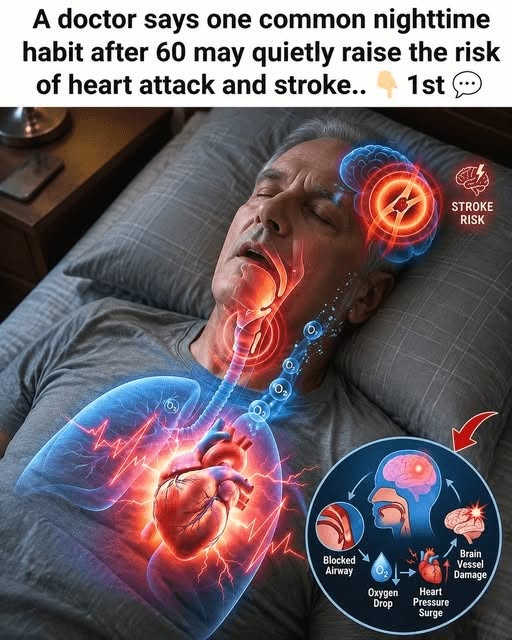
That headline is another fear-based clickbait claim. There is no single “sleeping mistake” that suddenly triggers heart attack or stroke in most healthy people overnight. However, there are sleep-related conditions and habits that can increase cardiovascular risk over time or in vulnerable people.
Let’s separate fact from exaggeration.
🫀 Real condition linked to night-time heart and stroke risk
Obstructive Sleep Apnea
This is the most important scientifically proven sleep-related risk factor.
What happens:
- Breathing repeatedly stops during sleep
- Oxygen levels drop
- Heart is repeatedly stressed during the night
Associated risks:
- High blood pressure
- Heart attack
- Stroke
- Irregular heartbeat (arrhythmia)
Common signs:
- Loud snoring
- Gasping during sleep
- Daytime sleepiness
- Morning headaches
This is real—but it is a medical condition, not a “sleeping mistake.”
🛌 Sleep habits that can indirectly increase risk (long-term)
1. Poor sleep quality (chronic)
- Long-term insomnia or fragmented sleep
- Linked to higher blood pressure and heart disease risk
2. Sleeping on the back (only in some people)
- Can worsen sleep apnea in susceptible individuals
- Not dangerous for most people
3. Heavy late-night meals + alcohol
- Can worsen acid reflux and sleep apnea
- Alcohol relaxes airway muscles
4. Ignoring high blood pressure
- Nighttime “silent hypertension” is a real risk factor for stroke
❌ What is NOT true
- No specific sleeping position “triggers a heart attack overnight” in healthy people
- There is no single “deadly sleeping mistake”
- Most heart attacks happen due to long-term cardiovascular disease, not one sleep posture
🧠 What actually happens in most night heart attacks
In people at risk:
- Narrowed coronary arteries (atherosclerosis)
- Plaque rupture during rest or early morning
- Blood clot formation
Sleep itself is not the cause—it is the underlying disease.
🚨 When to take sleep-related risk seriously
See a doctor if you have:
- Loud snoring + daytime fatigue
- High blood pressure that’s hard to control
- Morning headaches
- Pauses in breathing during sleep (observed by others)