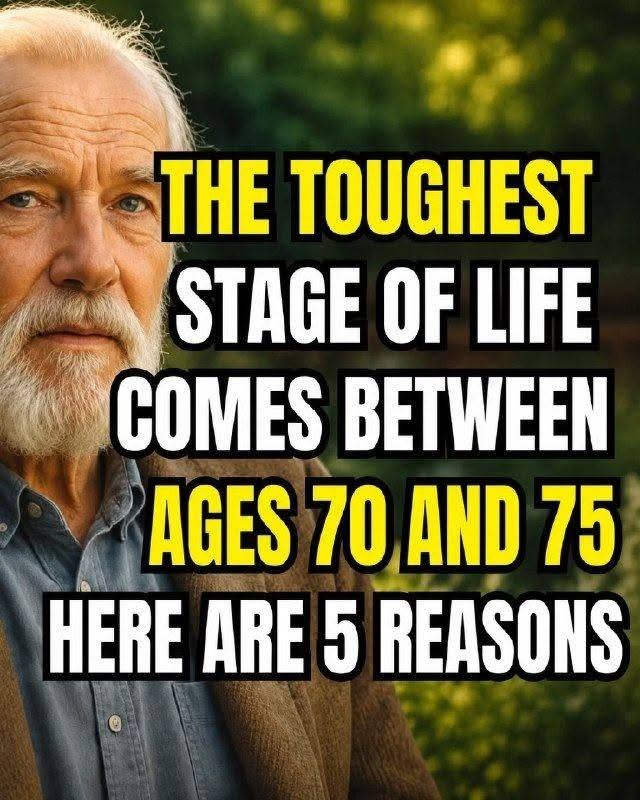
That said, some people do find the early 70s challenging for a few real, well-documented reasons:
Why the early 70s can feel harder for some people
1. Increase in chronic health conditions
Conditions become more common with age, such as:
- Heart disease
- Type 2 Diabetes
- Arthritis
- Osteoporosis
These can affect mobility, energy, and independence.
2. Muscle and strength loss
Natural age-related decline in muscle mass (known as sarcopenia) can lead to:
- Reduced balance
- Slower walking speed
- Higher fall risk
3. Loss of peers and social changes
Many people in their 70s experience:
- Death of friends or spouse
- Smaller social circles
- Retirement-related isolation
4. Reduced physical resilience
Recovery from illness or injury is often slower than in younger years.
5. Financial and lifestyle adjustments
Some people face:
- Fixed retirement income
- Rising healthcare costs
- Changes in independence (driving, travel, etc.)
Important context
Not everyone experiences decline in their 70s. Many people:
- Stay physically active
- Continue working or volunteering
- Travel and maintain strong social lives
- Report high life satisfaction
Research in aging consistently shows that well-being is strongly influenced by:
- Physical activity
- Social connection
- Mental engagement
- Access to healthcare
Bottom line
The age range 70–75 is not inherently “the hardest”—it’s simply a period where health and life changes become more noticeable, especially if underlying conditions are present.
If you want, I can break down what science says about happiness across different ages or how to stay strong and independent into older age.