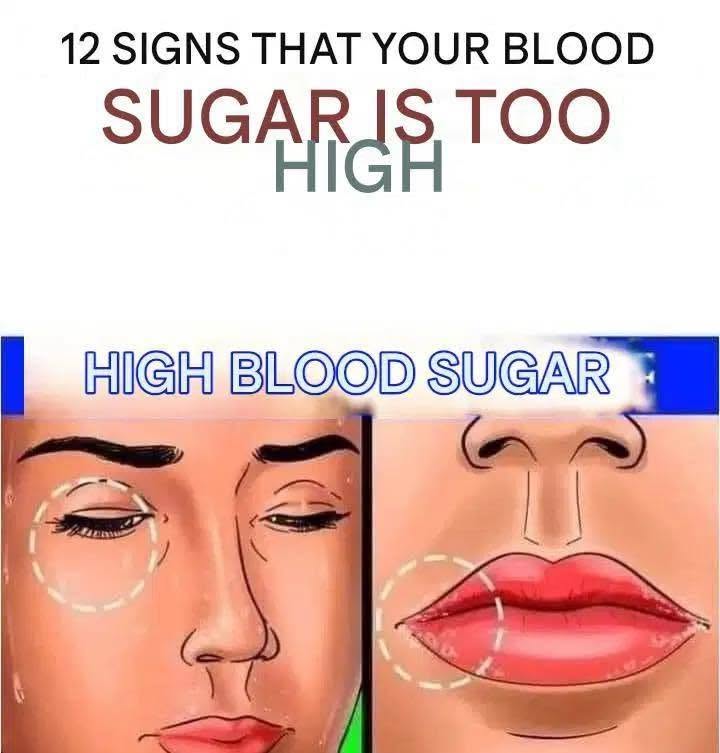
The title “The High-Sugar Alert: Recognizing the 12 Key Symptoms Your Body is Showing You” is partly accurate but should be interpreted with caution. High blood sugar (hyperglycemia) can cause symptoms, but symptoms alone cannot diagnose it. Many of these signs can also have other causes.
Common symptoms associated with high blood sugar include:
- Frequent urination.
- Increased thirst.
- Increased hunger.
- Fatigue or unusual tiredness.
- Blurred vision.
- Dry mouth.
- Unexplained weight loss (more common in untreated Type 1 Diabetes).
- Slow-healing cuts or sores.
- Frequent infections (such as skin or urinary tract infections).
- Dry or itchy skin.
- Tingling or numbness in the hands or feet (usually from long-term nerve damage rather than a sudden rise in blood sugar).
- Difficulty concentrating or headaches.
It’s important to know that:
- Some people with high blood sugar have no symptoms, especially early in Type 2 Diabetes.
- These symptoms are not specific to high blood sugar and can occur with other medical conditions.
- The only way to confirm high blood sugar is through blood glucose testing, such as a fasting blood sugar test, a random glucose test, or an HbA1c test.
If someone has symptoms along with very high blood sugar—especially nausea, vomiting, abdominal pain, confusion, rapid breathing, or fruity-smelling breath—they should seek urgent medical care, as these can be signs of a serious complication.
Overall, the title is plausible but oversimplified. The symptoms listed can be warning signs, but they should prompt proper medical evaluation rather than being used to self-diagnose high blood sugar.