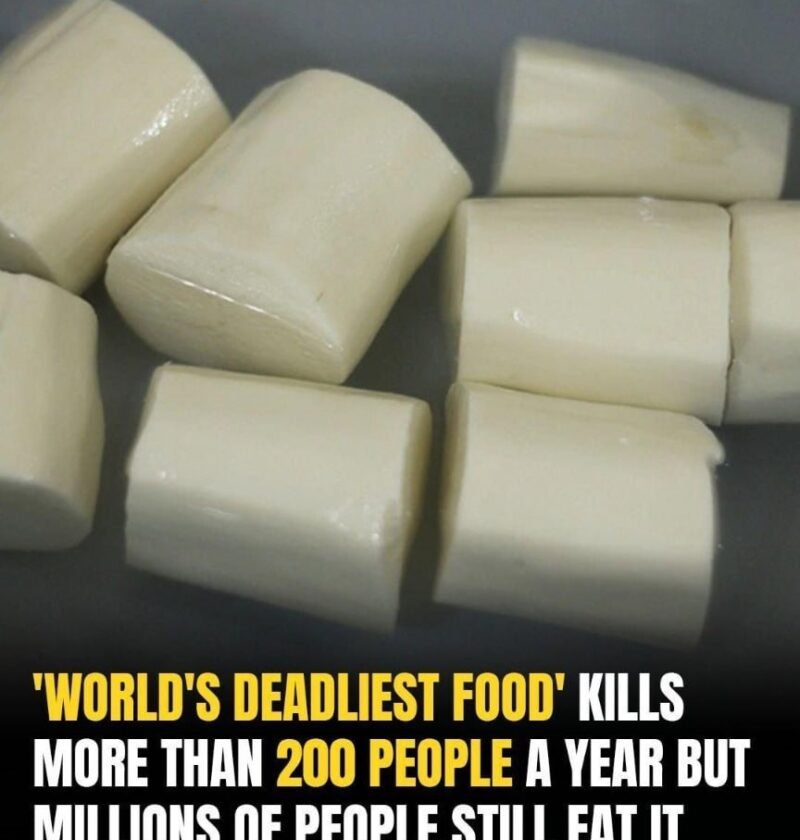
That headline is referring to cassava—a very common food in parts of Africa, Asia, and South America.
🌿 The “World’s Deadliest Food” — What It Actually Is
The food often described this way is cassava, a starchy root vegetable also known as manioc or yuca. It is a major staple for hundreds of millions of people.
👉 Scientific name: Manihot esculenta
⚠️ Why cassava is considered “dangerous”
Cassava naturally contains compounds called cyanogenic glycosides, which can release cyanide if the root is not properly prepared.
If eaten raw or improperly processed, it can cause:
- Cyanide poisoning
- Dizziness and vomiting
- Weakness
- In severe cases, neurological damage or death
🧠 What causes the reported deaths?
The deaths linked to cassava are not from normal consumption, but from:
- Poor processing (not soaking or fermenting properly)
- Famine conditions where people rush preparation
- Eating bitter cassava varieties without proper detoxification
Public health reports estimate that improper preparation may contribute to serious poisoning cases in vulnerable regions.
🍽️ Why nearly 500 million people still eat it safely
Despite the risks, cassava is:
- Drought-resistant
- Easy to grow in poor soil
- High in calories (important for food security)
- A staple food in many developing regions
When properly processed, cassava is safe to eat and widely consumed daily.
🧑🍳 How cassava is made safe
Traditional preparation removes toxins through:
- Peeling the root
- Soaking in water for hours or days
- Fermenting
- Boiling thoroughly
- Drying and grinding into flour
These steps reduce cyanide levels to safe amounts.
🌍 Where cassava is commonly eaten
Cassava is a staple in:
- West and Central Africa
- Brazil and parts of South America
- Southeast Asia
It is used to make foods like:
- Tapioca
- Cassava flour bread
- Fufu
- Chips and porridge
🧠 Why the “world’s deadliest food” label is misleading
The label is dramatic but misleading because:
- It ignores proper preparation methods
- It confuses raw toxicity with real-world eating practices
- It overlooks its importance as a global food source
A more accurate statement would be:
Cassava can be toxic if improperly prepared, but it is safe and nutritious when processed correctly.
🧾 Bottom Line
Cassava is not a “deadly food” in normal use. It is a staple crop that becomes dangerous only when preparation is done incorrectly.
Millions rely on it safely every day.
If you want, I can also explain:
- Other common foods that are toxic when raw (like kidney beans or potatoes)
- Or how cassava is turned into tapioca pearls 👍