That claim—“burns weeds in 1 day and they never grow again”—is not true in any reliable, long-term sense. Weeds are resilient plants with deep roots, and no simple spray guarantees permanent elimination.
However, some methods can quickly kill visible weed growth, especially small or young weeds.
Fast Weed Control: What Actually Works (and What Doesn’t)
Weeds are unwanted plants that compete with your garden or pathways. Effective control depends on killing both the leaves AND the roots, not just burning the surface.
A common DIY approach involves household substances like vinegar or boiling water, but results vary.
Why “instant weed death forever” is misleading
Weeds return because:
- Seeds remain in the soil for years
- Roots regrow after surface damage
- Nearby wind or animals spread new seeds
- Soil is still fertile and unprotected
Even professional herbicides rarely guarantee permanent elimination.
Methods that can kill weeds quickly (short-term effect)
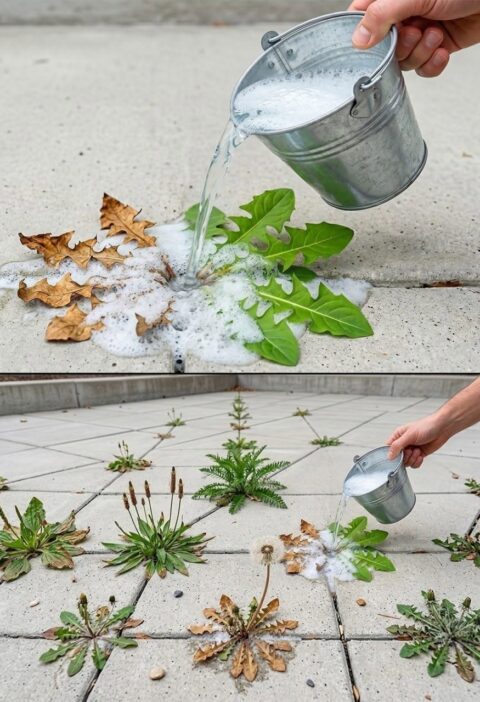
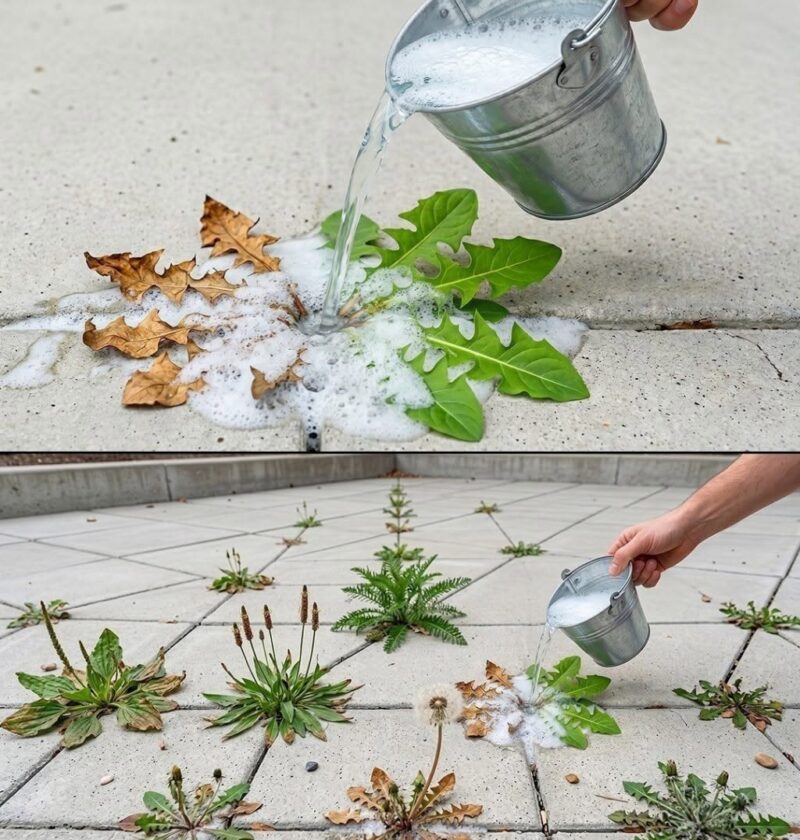
1. Boiling water
Pouring boiling water over weeds can:
- Burn leaves immediately
- Kill small weeds down to the root surface
Best for: cracks in sidewalks and driveways
2. Vinegar-based solutions
Household vinegar (acetic acid) can:
- Dry out leaves
- Kill young weeds above ground
But:
- It often does NOT kill deep roots
- Weeds may regrow
3. Manual removal
Pulling weeds out by hand or tool:
- Removes roots directly
- Most effective for long-term control if done properly
Best done after rain when soil is soft.
4. Mulching (prevention method)
Covering soil with:
- Wood chips
- Straw
- Bark mulch
Blocks sunlight and prevents new weeds from growing.
Best long-term strategy (what actually works)
To reduce weeds over time:
- Remove weeds early before they seed
- Improve soil coverage (mulch or ground cover plants)
- Water only desired plants
- Maintain consistent garden maintenance
Safety note
Avoid mixing chemicals like bleach or salt-based solutions on soil, as they can:
- Damage surrounding plants
- Harm soil quality
- Kill beneficial microorganisms