Why Night Cramps Happen — Causes, Science, and Prevention (SEO Health Guide)
Understanding Night Cramps: Sudden Muscle Pain While Sleeping
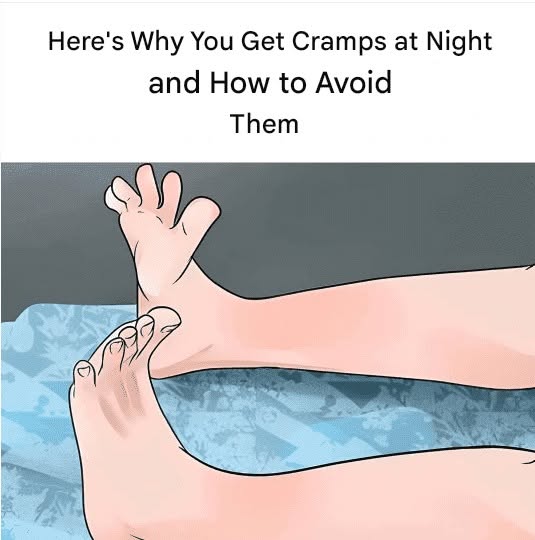
Night cramps are sudden, involuntary muscle contractions that usually affect the calves, feet, or thighs while a person is resting or sleeping. They can be extremely painful and may last from a few seconds to several minutes. After the cramp stops, the muscle often remains sore for hours.
These are commonly known as “night leg cramps” and are especially frequent in adults, older individuals, athletes, and people with certain lifestyle or medical factors.
Although they are usually harmless, repeated episodes can disturb sleep quality and may signal underlying issues related to hydration, circulation, or mineral balance.
What Actually Happens in the Body During a Cramp?
Muscles normally contract and relax smoothly due to signals from the nervous system. During a cramp, this system becomes temporarily imbalanced, causing the muscle to contract strongly and not relax properly.
This can be triggered by:
- Overactive nerve signals
- Muscle fatigue
- Poor blood flow
- Electrolyte imbalance
Night cramps often occur when the body is relaxed, especially during deep sleep, when muscle movement is minimal and circulation slows down slightly.
1. Dehydration: One of the Most Common Causes
Not drinking enough water during the day is a major trigger for night cramps.
When the body is dehydrated:
- Blood volume decreases
- Muscle function becomes less efficient
- Nerves become more sensitive
This makes muscles more likely to contract suddenly during rest.
People living in hot climates or those who sweat a lot during the day are at higher risk.
2. Mineral Imbalance (Electrolytes)
Muscles depend on minerals like magnesium, potassium, calcium, and sodium to function properly. When these minerals are low, muscle control becomes unstable.
This imbalance can lead to sudden tightening of muscles, especially at night.
A deficiency in magnesium is particularly linked to muscle cramps, as it plays a key role in muscle relaxation.
3. Poor Blood Circulation
Reduced blood flow to the legs during sleep can also trigger cramps.
This is more common in:
- People who sit for long periods
- Those with sedentary lifestyles
- Individuals with vascular issues
When muscles don’t receive enough oxygen-rich blood, they may react by contracting painfully.