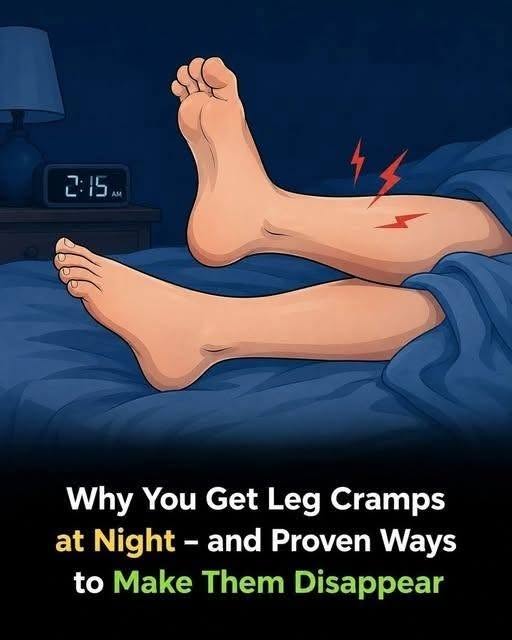
Nighttime cramps—especially in the legs or feet—are very common, but the exact cause is not always clear. They are usually sudden, involuntary muscle contractions that can last from a few seconds to several minutes.
Common reasons people get cramps at night include:
- Muscle fatigue or overuse: Long periods of standing, walking, exercise, or unusual activity can trigger cramps.
- Dehydration: Not drinking enough fluids, especially with sweating or heat exposure, may contribute.
- Electrolyte changes: Low levels of minerals such as potassium, magnesium, or calcium can play a role in some people, though supplements do not help everyone.
- Age-related changes: Night leg cramps become more common as people get older.
- Reduced movement or prolonged sitting: Tight muscles and reduced circulation during inactivity may contribute.
- Certain medications or medical conditions: Some medicines (such as certain diuretics) and conditions affecting nerves, muscles, or circulation can increase the likelihood of cramps.
What may help prevent or relieve cramps
- Stretch the affected muscle gently when a cramp occurs (for a calf cramp, pulling the toes upward toward the shin may help).
- Stay physically active and stretch regularly, especially calf and leg muscles.
- Drink enough fluids.
- Wear supportive footwear and avoid sudden increases in exercise intensity.
- A warm bath, heating pad, or gentle massage may relax the muscle.
See a healthcare professional if:
- Cramps are frequent, severe, or getting worse.
- They cause significant sleep disruption.
- You have leg swelling, redness, weakness, numbness, or changes in walking.
- You started having cramps after beginning a new medication.
If you tell me where the cramps occur (calves, feet, thighs, hands), your age, and how often they happen, I can help narrow down the likely causes.