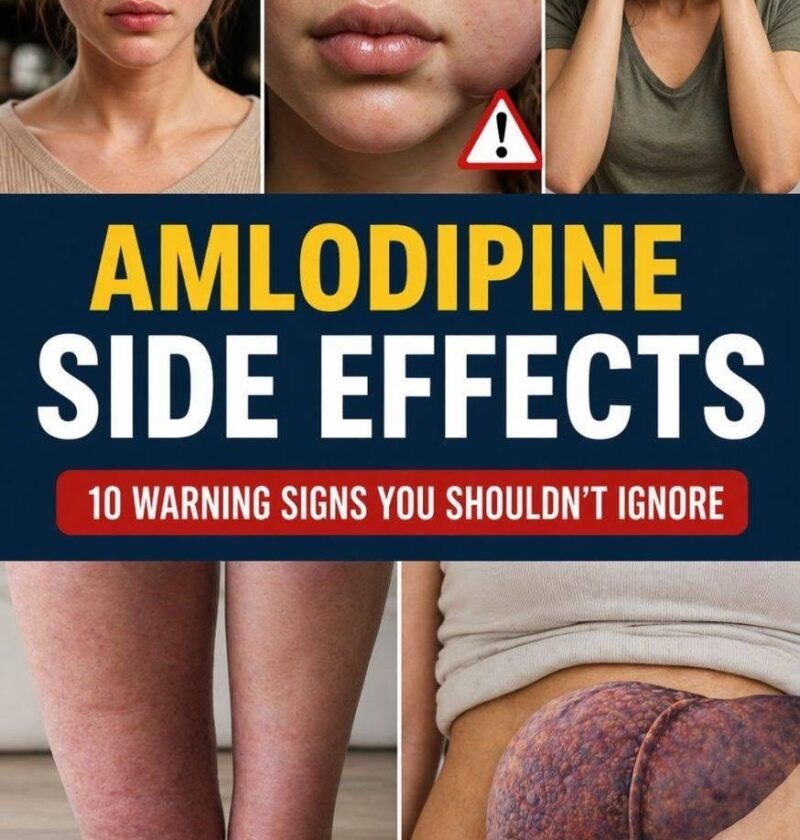
First, a reality check: Amlodipine is widely prescribed for high blood pressure and angina, and its side effects are actually well documented in medical practice. The idea that doctors “don’t highlight them” is often overstated—what happens is that common mild effects are discussed briefly, while rarer ones may not be emphasized unless they’re relevant to the patient.
That said, here are 12 important side effects worth knowing, including the ones people most notice in real life:
1) Swelling of ankles and feet (very common)
This is the #1 signature side effect. It happens because amlodipine relaxes blood vessels, causing fluid to pool in the lower legs.
2) Flushing (warmth or redness of face)
Some people feel sudden warmth or visible redness, especially after starting or increasing the dose.
3) Headache
Often occurs early in treatment as blood vessels adjust.
4) Dizziness or lightheadedness
More noticeable when standing up quickly due to lower blood pressure.
5) Fatigue or unusual tiredness
Some users feel a “slowed down” energy level, especially in the first weeks.
6) Palpitations (awareness of heartbeat)
Not dangerous in most cases, but can feel uncomfortable or anxiety-provoking.
7) Gum overgrowth (gingival hyperplasia)
A less common but real effect where gums may swell or grow over time with long-term use.
8) Nausea or stomach discomfort
Usually mild, but can occur as the body adapts.
9) Sleep disturbances
Some people report insomnia or unusual sleep patterns.
10) Muscle cramps or weakness
Not as common, but can appear in some individuals, especially older adults or those on multiple medications.
11) Low blood pressure (hypotension)
More likely if combined with other BP medicines. Symptoms include:
- Weakness
- Blurred vision
- Faint feeling
12) Rare but serious allergic reactions
Very uncommon, but may include:
- Swelling of lips/face
- Severe rash
- Breathing difficulty
🧠 Key insight doctors focus on
Most clinicians prioritize explaining:
- Ankle swelling
- Dizziness
- Headache
Because these are the most common reasons people stop the medication.
⚠️ Important perspective
Amlodipine is generally considered safe and long-acting, and for most patients the benefit (preventing stroke and heart attack) is far greater than the side effects.
If you want, I can also break down:
- How to reduce ankle swelling without stopping the medicine
- Whether amlodipine causes weight gain or kidney damage (common myths)
- Or safer alternative BP medications depending on your case