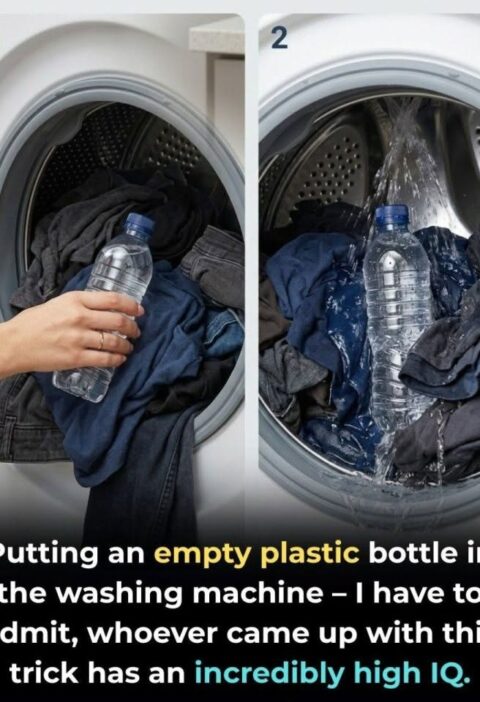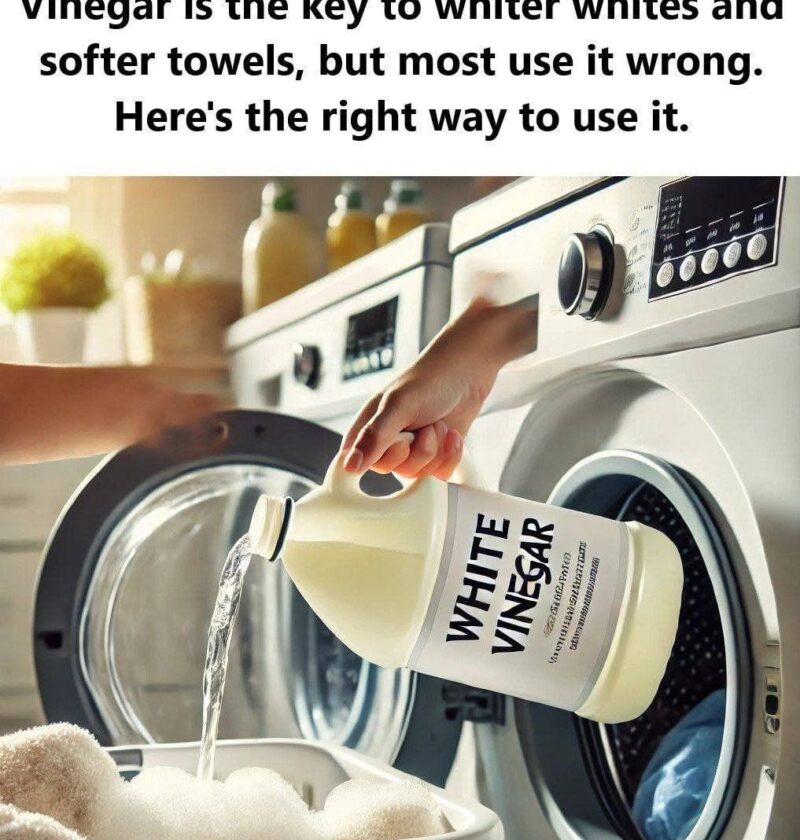
That headline is partly based on a real laundry trick, but it’s also exaggerated. Vinegar (especially white vinegar) can help with laundry, but it is not a bleaching agent and won’t truly “whiten” fabrics like chlorine bleach.
Here’s what it actually does—and the correct way to use it.
🧺 What vinegar can really do in laundry
✔️ Helps remove odor
- Breaks down smell-causing residues (sweat, detergent buildup)
✔️ Softens towels naturally
- Reduces detergent residue that makes towels feel stiff
✔️ Helps rinse out detergent
- Especially useful in hard water areas
✔️ Mild brightening effect
- Can make whites look cleaner by removing buildup (not true bleaching)
⚠️ What vinegar does NOT do
- It does NOT bleach fabrics white
- It does NOT kill all bacteria in a washing machine
- It does NOT replace detergent
- It does NOT remove deep stains like chlorine bleach or stain removers
🧴 The “right way” to use vinegar in laundry
🟢 For soft towels
- Add ½ to 1 cup of white vinegar
- Put it in the fabric softener compartment
- Run normal wash (no need to mix with detergent in the same step)
🟢 For odor removal
- Add vinegar during the rinse cycle
- Or run an empty “clean wash” with hot water + vinegar for machine cleaning
🚫 Common mistakes people make
- Mixing vinegar directly with bleach ❌ (creates toxic chlorine gas risk)
- Using too much vinegar ❌ (can damage rubber seals over time)
- Expecting it to replace detergent ❌
🧠 Bottom line
Vinegar is a useful laundry helper, especially for softness and odor control, but it’s not a magic whitening solution. It works best as a supplement to detergent, not a replacement.
If you want, I can also share:
- Best natural stain removers that actually work
- Why towels get stiff over time
- Or how to make whites look brighter without bleach