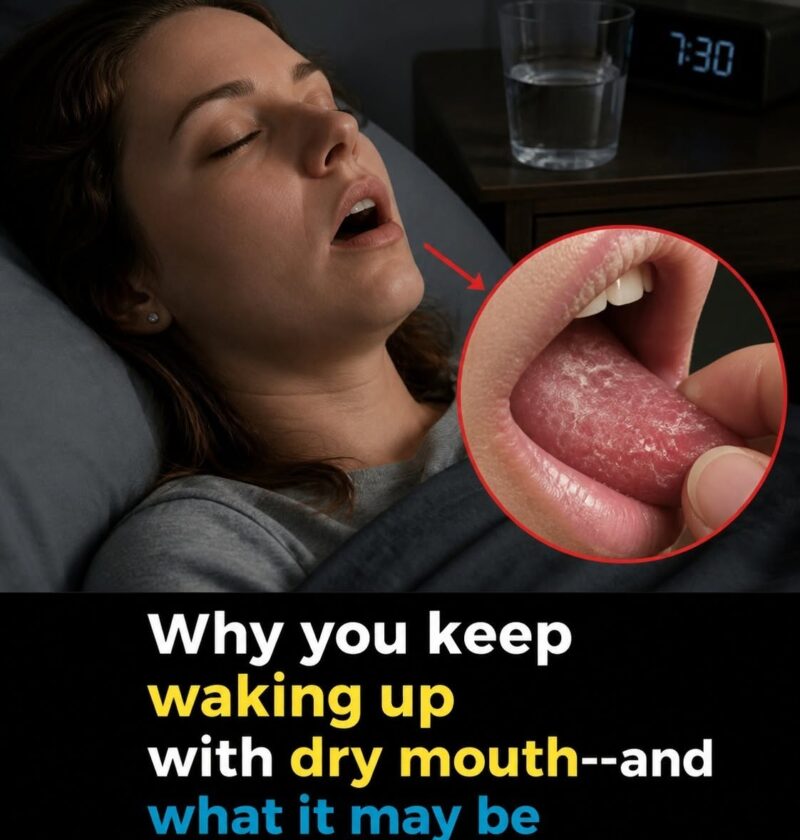
Waking up with a dry mouth is pretty common, but it’s usually your body signaling that something about breathing, hydration, or sleep quality isn’t quite right. Here are the most likely explanations:
1) You’re slightly dehydrated
If you didn’t drink enough water the day before—or had a lot of caffeine, salty food, or alcohol—your body produces less saliva overnight. That leads to a dry, sticky mouth in the morning.
2) You’re breathing through your mouth while sleeping
This is one of the biggest causes. If your nose is blocked (allergies, sinus issues, a cold) or you naturally sleep with your mouth open, airflow dries out the oral tissues.
3) Sleep apnea or snoring
In conditions like Obstructive Sleep Apnea, people often breathe through the mouth during sleep or wake up repeatedly at night. This can cause persistent dry mouth along with symptoms like loud snoring, morning headaches, or feeling tired despite sleeping.
4) Medications or substances
Some common medications (like antihistamines, antidepressants, or blood pressure drugs) reduce saliva production. Smoking or vaping can also dry out the mouth.
5) Dry environment
Air conditioning, heaters, or low humidity can dry out the air you breathe all night, especially in winter or sealed rooms.
When it’s worth paying attention
Occasional dry mouth isn’t usually serious. But if it happens often, especially with snoring, fatigue, or headaches, it’s worth checking for sleep or breathing issues.
Simple fixes you can try
- Drink water regularly during the day (not just at night)
- Keep a glass of water near your bed
- Try nasal breathing support (saline spray or allergy treatment if needed)
- Use a humidifier if your room air is dry
- Limit caffeine or alcohol in the evening
If you want, tell me a bit about your sleep (snoring, congestion, meds, etc.), and I can help narrow down what’s most likely in your case.