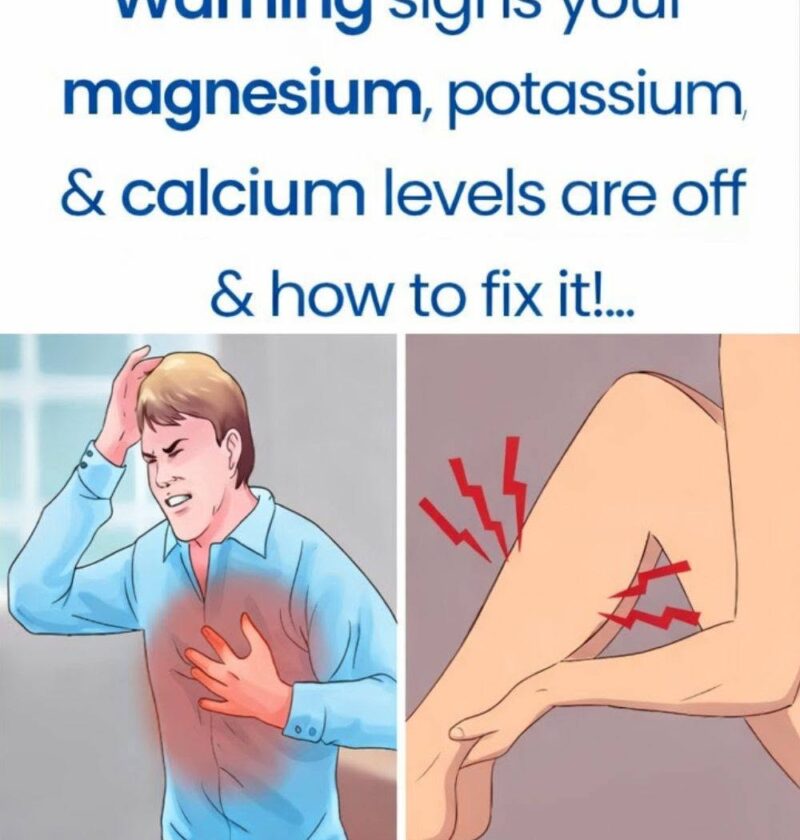
That headline is overstated. You can’t reliably tell your magnesium, potassium, or calcium levels just from “warning signs”—the only way to confirm is with a blood test. Symptoms can overlap with many other conditions.
These minerals—magnesium, potassium, and calcium—are essential for nerves, muscles, and heart rhythm, but imbalance is usually confirmed medically, not guessed from symptoms alone.
🧠 Possible signs of imbalance (not diagnostic)
🟣 Magnesium imbalance
Magnesium related issues may include:
- Muscle cramps or twitching
- Fatigue or weakness
- Irritability or anxiety
- Irregular heartbeat (in severe cases)
🟡 Potassium imbalance
Potassium issues may include:
- Muscle weakness or heaviness
- Abnormal heart rhythm (serious)
- Tingling sensations
- Fatigue
⚠️ Both low and high potassium can be dangerous.
⚪ Calcium imbalance
Calcium issues may include:
- Muscle cramps or spasms
- Numbness or tingling in fingers
- Bone weakness (long-term deficiency)
- Confusion or fatigue (in severe cases)
🚨 Important reality check
These symptoms are non-specific, meaning they can also come from:
- Dehydration
- Stress or anxiety
- Thyroid problems
- Vitamin deficiencies (like B12)
- Medication side effects
So symptom-checking alone is not reliable.
🧪 How doctors actually check
- Blood tests for electrolyte levels
- Kidney function tests
- ECG (if heart rhythm symptoms are present)
🥗 “How to fix it” safely (depends on cause)
If levels are low:
- Eat balanced foods (leafy greens, dairy, fruits, nuts)
- Oral supplements only if recommended
If levels are high:
- May require adjusting diet or medications
- Medical supervision is important (especially potassium)