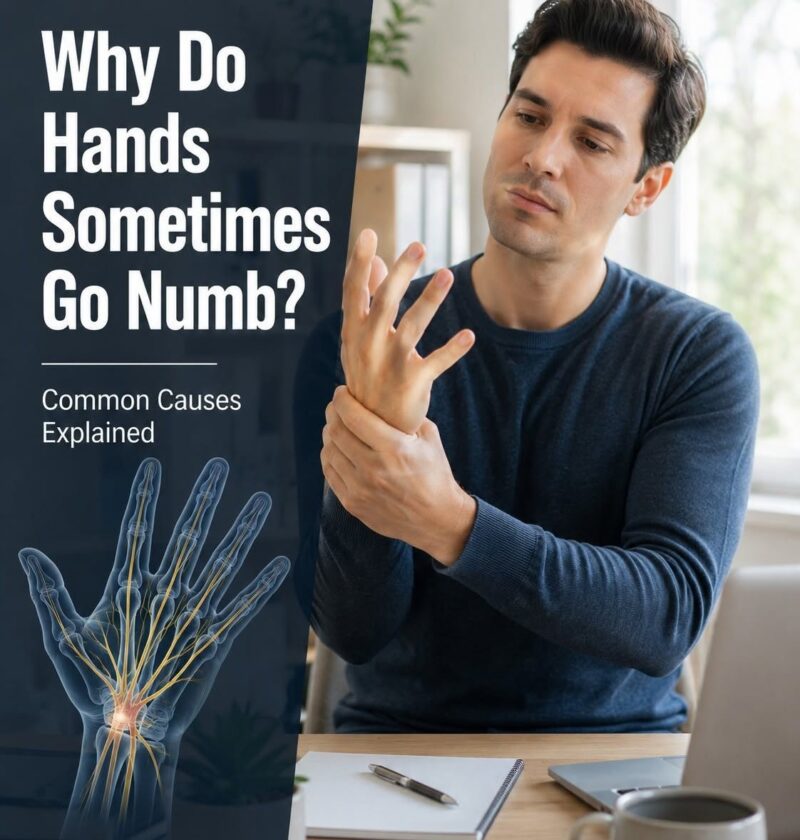
Hand numbness can happen for many reasons, ranging from temporary pressure on a nerve to conditions that need medical attention. The sensation may feel like tingling, “pins and needles,” reduced feeling, or weakness in the hand or fingers.
Common causes of hand numbness
- Pressure on a nerve
- Sleeping on your arm or keeping your wrist in one position for too long can temporarily compress nerves.
- Symptoms often improve after changing position.
- Carpal tunnel syndrome
- Compression of the median nerve at the wrist.
- Often causes numbness or tingling in the thumb, index, middle, and part of the ring finger, especially at night.
- Neck problems
- Nerves traveling from the neck to the arm can become irritated by conditions such as a pinched nerve or disc problems.
- Symptoms may include neck pain, arm pain, or hand tingling.
- Diabetes-related nerve damage
- High blood sugar over time can damage nerves and cause numbness, often starting in the hands or feet.
- Vitamin deficiencies
- Low levels of certain nutrients, especially vitamin B12, can affect nerve function.
- Injuries
- Damage to the wrist, hand, arm, or neck can affect nerves and sensation.
- Circulation problems
- Reduced blood flow can sometimes cause numbness, coldness, or color changes in the fingers.
- Other neurological conditions
- Less commonly, conditions affecting the brain, spinal cord, or nerves can cause numbness.
When to seek medical help urgently
Get emergency care if numbness:
- Starts suddenly, especially on one side of the body
- Occurs with face drooping, trouble speaking, confusion, severe headache, dizziness, or weakness (possible stroke symptoms)
- Happens after a serious injury
- Is accompanied by chest pain or shortness of breath
Make a doctor’s appointment if:
- Numbness keeps returning or is getting worse
- It lasts for days or does not improve
- You have weakness, trouble gripping objects, or loss of coordination
- It affects your daily activities
A healthcare professional can determine the cause through your symptoms, medical history, and sometimes tests such as blood work or nerve studies.