The color of your urine can give simple clues about hydration and sometimes health issues, but it’s not a diagnosis on its own.
Here’s a practical guide:
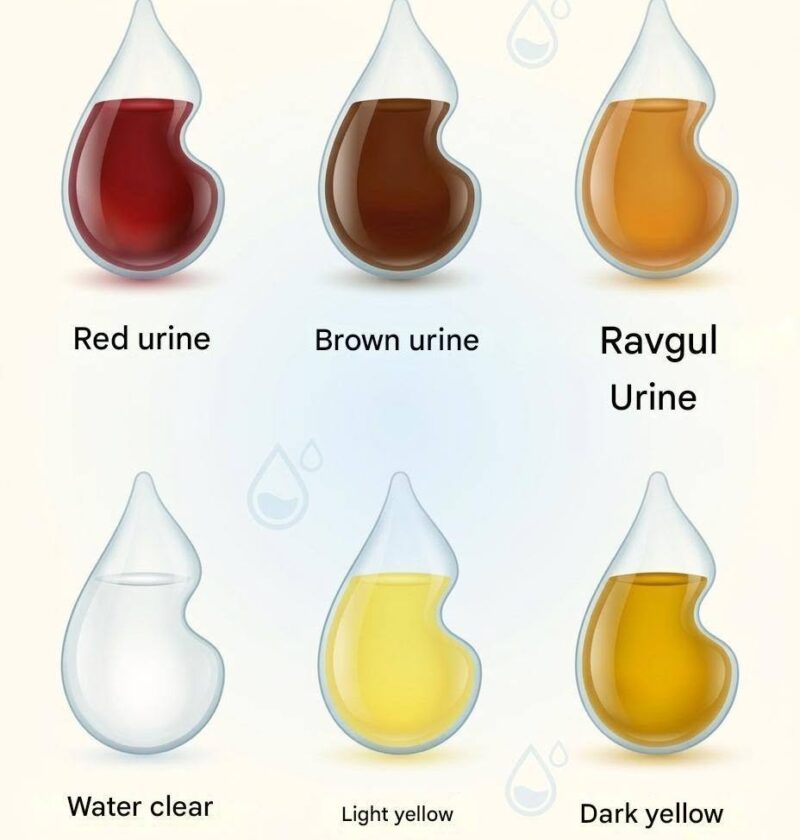
💧 Light straw / pale yellow (ideal)
This usually means:
- Good hydration
- Normal kidney function in most cases
This is considered the healthy target range.
💛 Dark yellow / amber
Often means:
- You need more fluids (mild dehydration)
- You may have sweated a lot or not drunk enough water
Common after exercise or hot weather.
🍯 Honey / orange shade
Possible causes:
- Dehydration
- Certain vitamins (especially B-complex)
- Some medications
If it stays orange without clear reason, it’s worth monitoring.
🧡 Dark orange / brownish
May suggest:
- Significant dehydration
- Liver or bile-related issues in some cases
- Rarely, muscle breakdown or other medical conditions
If persistent, it should be checked by a doctor.
🌈 Pink / red
Possible causes:
- Blood in urine (can be infection, stones, or other conditions)
- Beets, berries, or food dyes
If not clearly food-related, it should be evaluated promptly.
🟢 Blue / green (rare)
Can be caused by:
- Certain medications
- Rare bacterial infections
- Food dyes
Usually not serious but should be checked if unexplained.
⚪ Very clear (transparent)
May mean:
- You’re drinking too much water
Occasionally okay, but consistently very clear urine can indicate overhydration, which may dilute electrolytes.
⚠️ When to see a doctor
Get checked if you notice:
- Blood or persistent red/pink urine
- Foamy urine that doesn’t go away
- Dark urine lasting more than a few days
- Pain, burning, fever, or back pain
These could be related to conditions like Urinary Tract Infection or kidney problems.
🧠 Key takeaway
- Best indicator of hydration: pale yellow urine
- Changes can be normal (food, vitamins, fluids)
- Persistent abnormal colors deserve medical attention