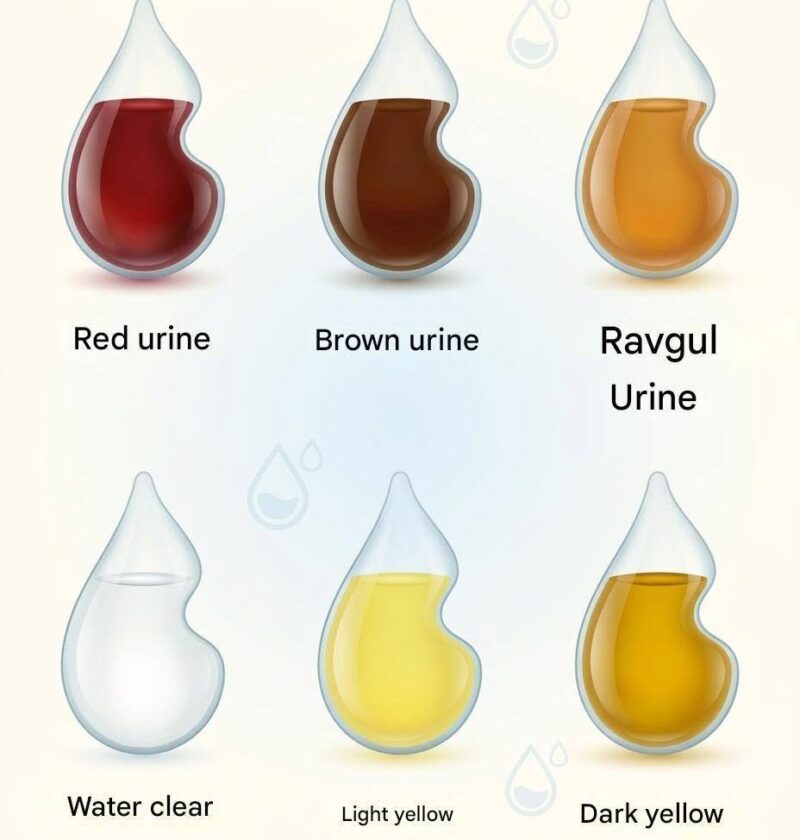
The color of your urine can give useful clues about hydration, diet, and sometimes medical issues, but it’s not a diagnosis on its own.
Here’s a clear, practical guide:
💛 Pale yellow (straw-colored)
This is normal and ideal.
It usually means:
- Well hydrated
- Normal kidney function
💛 Dark yellow / amber
Most common and usually simple:
- Mild dehydration
Also can be caused by:
- Vitamin B supplements (especially B-complex)
👉 Usually improves with more fluids
🟠 Orange urine
Possible causes:
- Dehydration
- Certain medications
- High bile levels (possible liver or bile duct issue)
⚠️ If persistent or with yellow eyes/stool changes → get checked
🔴 Pink or red urine
Can be harmless or serious:
Harmless causes:
- Beets, berries, food dyes
Concerning causes:
- Blood in urine (infection, kidney stones, bladder issues)
👉 If not food-related, it needs medical evaluation
🟢 Blue or green urine (rare)
Possible causes:
- Medications or dyes
- Rare bacterial infections
Usually not dangerous, but unusual enough to mention to a doctor if unexplained
🟤 Brown / tea-colored urine
More concerning:
- Severe dehydration
- Liver disease
- Muscle breakdown (rare but serious)
⚠️ Should be checked if not diet-related
⚪ Cloudy urine
Possible causes:
- Urinary tract infection (UTI)
- Kidney stones
- Dehydration
- Crystals (sometimes harmless)
If paired with burning or fever → likely infection
⚠️ When to see a doctor
Seek medical advice if you notice:
- Blood without clear food cause
- Persistent brown/orange urine
- Pain, burning, fever, or foul smell
- Sudden unexplained change lasting more than 1–2 days
🧠 Key takeaway
Urine color mainly reflects:
- 💧 Hydration level
- 🍎 Diet and supplements
- 💊 Medications
- ⚠️ Sometimes infection or organ issues
If you want, I can also explain what urine smell, foam, or frequency changes mean, which are often even more informative than color.