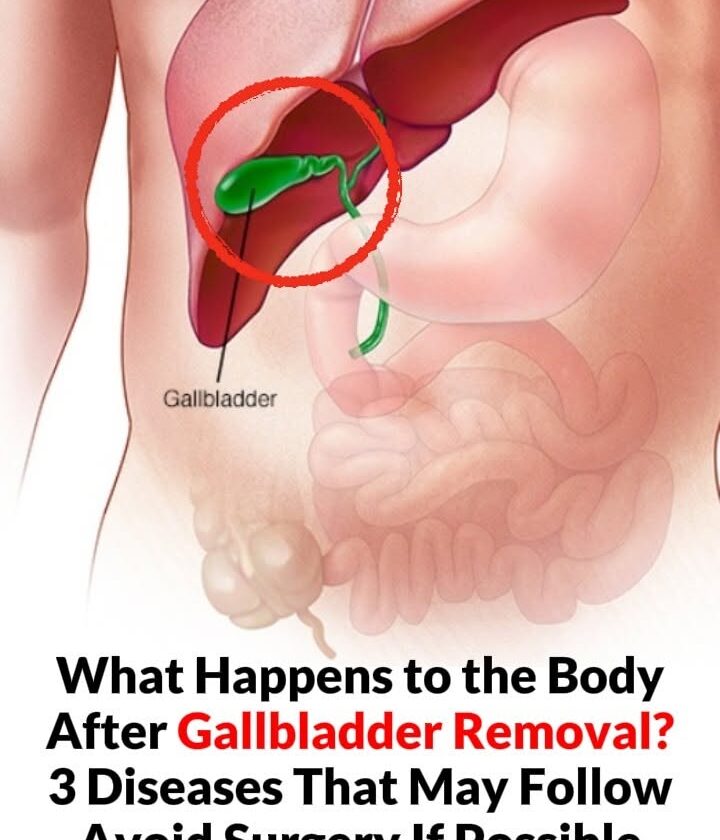
The title “What Happens to the Body After Gallbladder Removal? 3 Diseases That May Follow – Avoid Surgery If Possible” makes a strong claim that can be misleading. Gallbladder removal (cholecystectomy) is a common procedure that is often recommended when the benefits outweigh the risks, such as with repeated gallstone attacks, gallbladder inflammation, or serious complications.
What changes after gallbladder removal?
The gallbladder stores bile made by the liver and releases it when needed to help digest fats. After removal:
- The liver still makes bile.
- Bile flows directly into the small intestine instead of being stored.
- Most people can digest food normally, although some notice changes at first.
Possible effects after surgery
1. Bile acid diarrhea
- Some people develop frequent or loose stools because bile reaches the colon in a different pattern.
- This can often be managed with dietary changes or medication.
2. Digestive changes
- Bloating, gas, or discomfort after fatty meals can occur.
- Eating smaller meals and reducing very fatty foods may help.
3. Reflux or bowel habit changes
- Some people report changes in digestion, including reflux symptoms or altered bowel patterns.
- These effects do not happen to everyone, and research continues on long-term associations.
Should gallbladder surgery always be avoided?
No. Avoiding surgery may be reasonable in some people who have gallstones without symptoms or mild symptoms that are being safely monitored. However, delaying necessary surgery can increase the risk of complications, including:
- Gallbladder infection
- Blocked bile ducts
- Pancreatitis (inflammation of the pancreas)
The decision should be based on the reason surgery is being considered, symptom severity, test results, and individual health factors.
A more accurate title would be:
“Life After Gallbladder Removal: Possible Changes, Risks, and When Surgery Is Needed”.