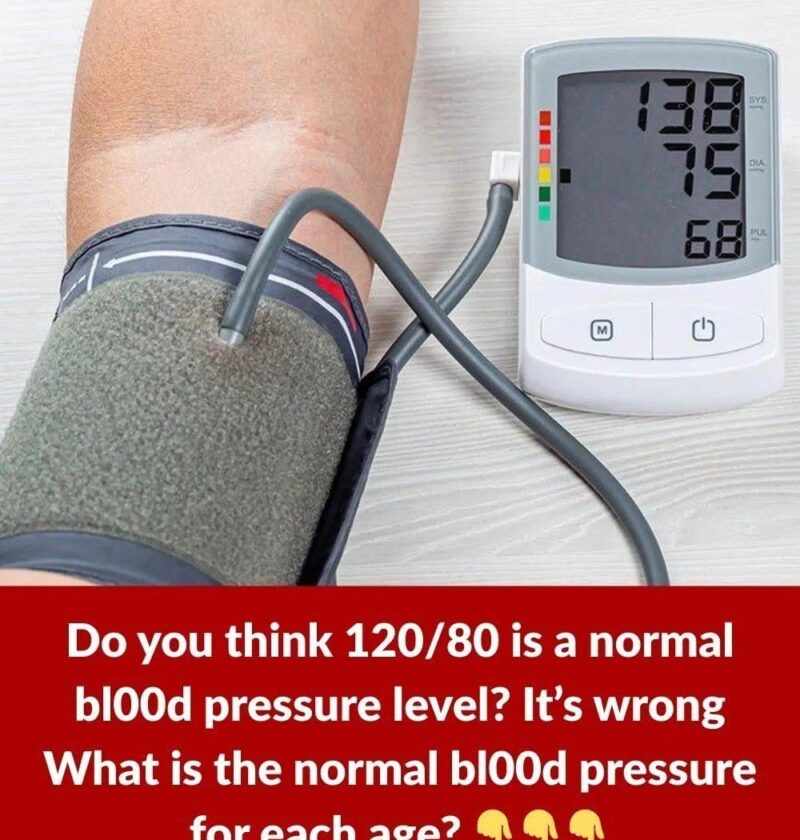
“Normal blood pressure” doesn’t have a single exact number for every age, but there are typical ranges used in medicine.
🫀 Adults (18+ years)
- Normal: less than 120/80 mmHg
- Elevated: 120–129 / less than 80
- High blood pressure (Hypertension): 130/80 or higher
This standard applies to most adults regardless of age.
👶 Children & teens (approximate ranges)
Blood pressure in kids changes with age, height, and sex, so doctors use percentiles—but these are simple averages:
- Newborns: ~60–90 / 30–60
- Infants (1–12 months): ~70–100 / 50–65
- Toddlers (1–3 years): ~80–105 / 55–70
- Children (4–10 years): ~90–110 / 60–75
- Teens (11–17 years): ~100–120 / 65–80
By late teens, values start approaching adult ranges.
👴 Older adults
- Still considered normal: under 120/80
- Slight increases are common with age due to stiffer arteries, but:
- Doctors usually still aim for below 130/80 in most cases
⚠️ Important note
- A “normal” reading depends on overall health, symptoms, and risk factors
- One reading isn’t enough—multiple readings over time matter more
If you want, tell me your age and reading, and I can help you understand whether it’s normal or not.