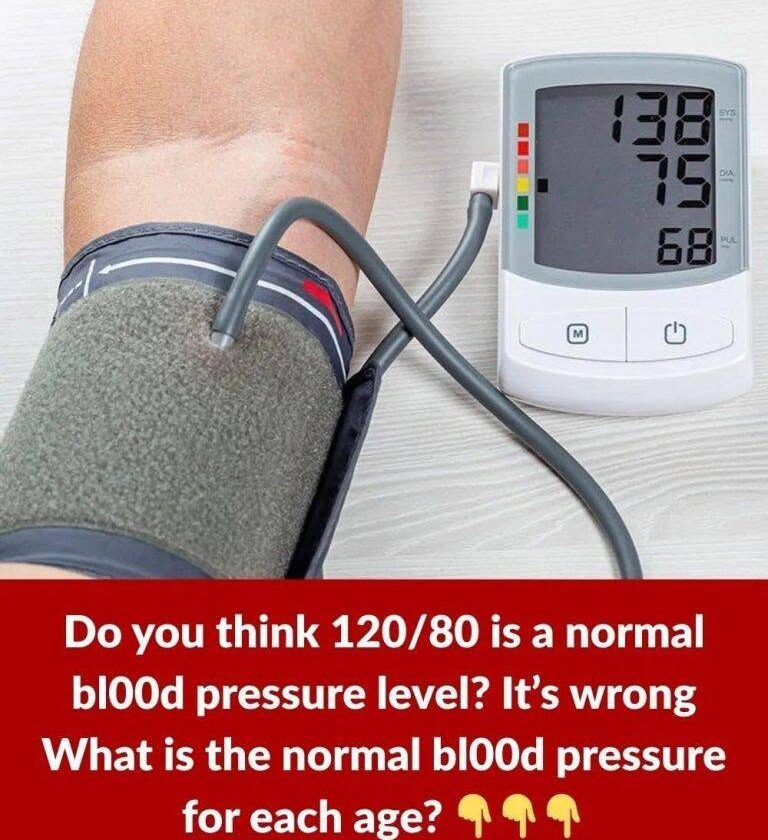
There isn’t a completely different “normal blood pressure for each age” in modern medicine. Instead, doctors use a general normal range for most adults, with only small variations for children and older adults.
Standard blood pressure (adults)
- Normal: less than 120/80 mmHg
- Elevated: 120–129 / less than 80
- High blood pressure (Stage 1): 130–139 / 80–89
- High blood pressure (Stage 2): 140+/90+
- Emergency: 180+/120+ (needs urgent care)
By age (simple general guide)
Children (approximate ranges vary by height/age)
- Toddlers (1–5 years): ~95–105 / 50–70
- School-age (6–12 years): ~97–112 / 57–75
- Teens (13–18 years): close to adult levels (~110–120 / 65–80)
Adults
- 18–39 years: ~110–120 / 70–80
- 40–59 years: may rise slightly (~115–130 / 75–85)
- 60+ years: often a bit higher due to artery stiffness, but ideally still below 130/80
Key reality
- There is no “safe high normal” like 150/90 just because of age—that’s outdated thinking.
- Doctors now aim for most adults to stay below 130/80, unless individualized otherwise.
When to worry
- Repeated readings above 140/90
- Dizziness, headaches, chest pain, or shortness of breath with high readings
If you want, I can also explain how to measure blood pressure correctly at home so you get accurate readings.