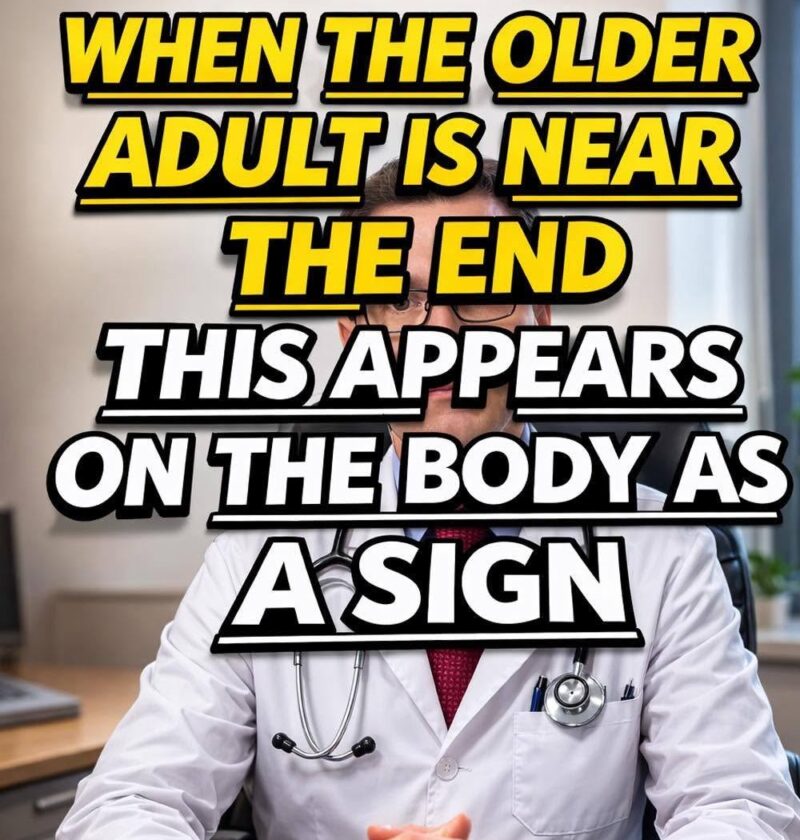
This kind of headline is often shared in a scary, overgeneralized way. In real medicine, what people describe as “signs an elderly person is nearing the end of life” are common changes seen in the natural dying process, especially in people with advanced illness or frailty. They are not a precise “4-sign rule,” and timing can vary widely.
In palliative medicine, these changes are discussed under end-of-life care.
Common signs that may appear in the final days or hours
Here are four common patterns doctors and hospice teams often observe:
1. Marked decrease in eating and drinking
The person may stop feeling hunger or thirst and take only small sips or bites—or none at all.
2. Increased sleep and reduced responsiveness
They may sleep most of the time and respond less to voice or touch. This is not necessarily discomfort—it’s part of the body conserving energy.
3. Changes in breathing pattern
Breathing may become irregular, shallow, or include pauses (called apnea). Sometimes there is noisy breathing due to secretions.
4. Cool or mottled skin in hands and feet
Circulation slows as the body prioritizes vital organs, so extremities may feel cold, bluish, or blotchy.
Important context
- These signs can appear days to hours before death, but the timeline is not exact.
- They are more common in people receiving comfort-focused care or with advanced illness.
- They do not always mean death is imminent within hours—sometimes the process takes longer.
What’s most important for families
- Comfort care matters more than forcing food or fluids at this stage.
- Keeping the person comfortable (mouth care, positioning, calm environment) is usually the focus.
- If in doubt, a doctor or hospice nurse can explain what is happening in that specific case.
If you want, you can tell me the exact situation you’re thinking about, and I can explain what stage it might correspond to more specifically and what to expect next.