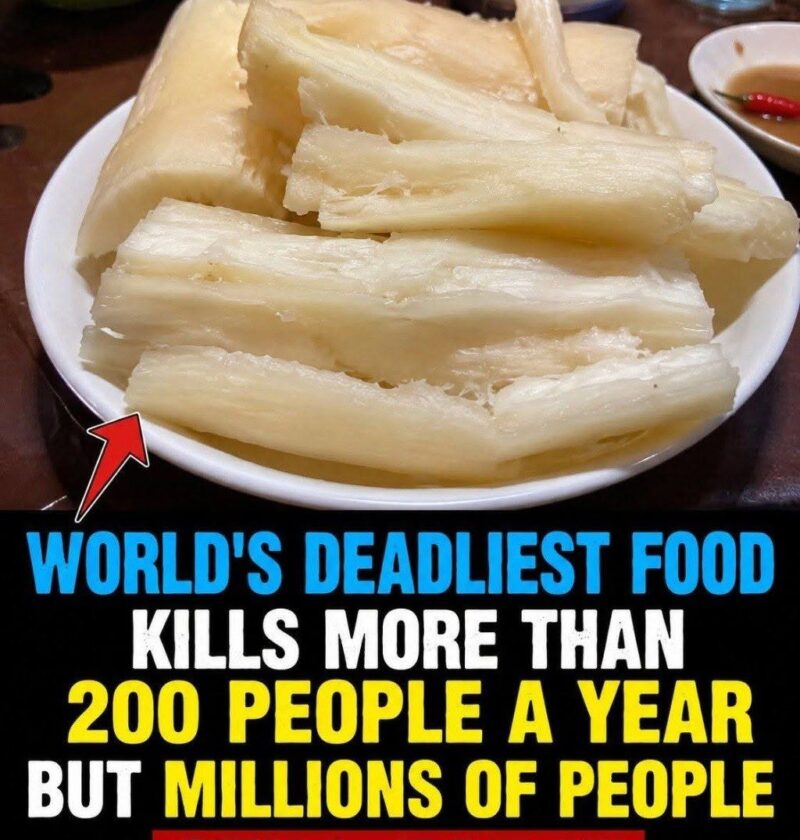
Cassava (also called manioc or yuca) is considered potentially dangerous because it naturally contains cyanogenic compounds—substances that can release hydrogen cyanide, a toxic chemical, if the plant is not processed properly.
The risk is mainly associated with bitter cassava, which generally contains higher levels of these compounds. Poorly prepared cassava has been linked to cyanide poisoning, especially in places where cassava is a major staple food and processing methods are inadequate.
How cassava is made safer to eat
Traditional preparation methods reduce cyanide levels by removing and breaking down these compounds:
- Peel the cassava thoroughly
- Most of the cyanogenic compounds are concentrated near the outer layers.
- Cut or grate it
- Breaking the plant tissue helps release the compounds so they can be removed.
- Soak or ferment (depending on the traditional method)
- Soaking and fermentation allow enzymes and microbes to help reduce toxins.
- Cook thoroughly
- Boiling, frying, or roasting after proper preparation helps remove remaining cyanide compounds. Do not eat raw cassava.
- Discard soaking water
- Do not reuse water that has been used to soak cassava.
Cassava is also an important food crop worldwide and, when properly processed, is generally safe. It provides carbohydrates and is used in foods such as tapioca, cassava flour, and many traditional dishes. The danger comes from improper preparation, not from cassava itself.