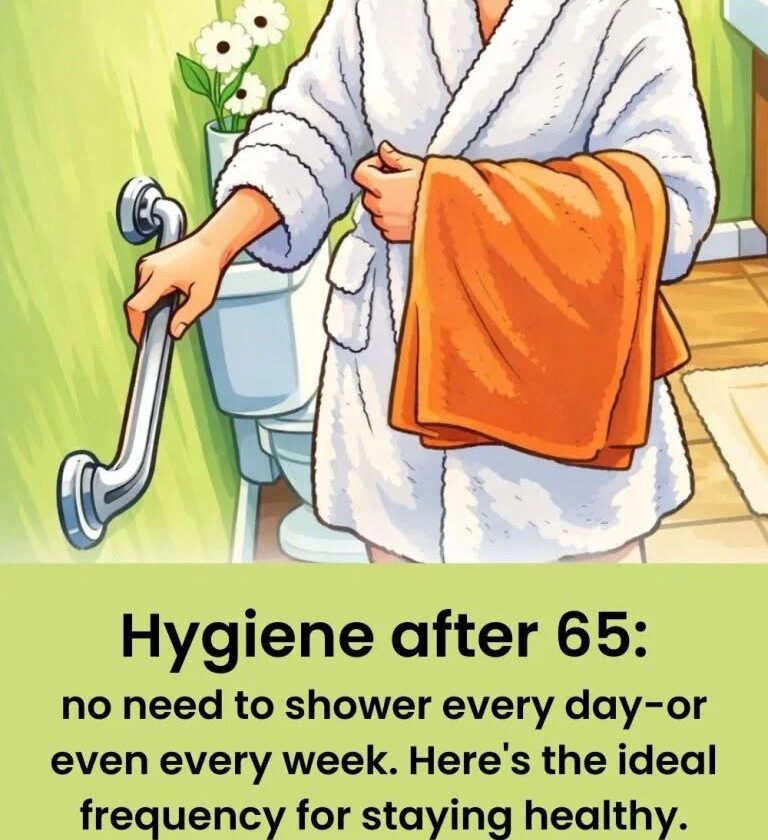
The idea that “daily showers after 65 do more harm than good” is partly true in certain situations—but overstated online.
It’s not about age alone. It’s about how aging skin changes and how bathing habits interact with it.
What actually changes after 65
As people age, skin naturally becomes:
- Drier (less oil production)
- Thinner and more fragile
- Slower to repair its barrier
This means it’s easier to develop irritation or dryness if bathing habits are harsh.
When daily showers can be a problem
Daily bathing may contribute to issues if:
- Water is very hot
- Soap is strong or heavily fragranced
- Showers are long
- Moisturizer is not used afterward
Possible effects:
- Dry, itchy skin
- Flaking or tightness
- Worsening of conditions like eczema
When daily showers are still fine
Daily showers are not harmful by default if:
- Water is lukewarm
- Mild, gentle cleanser is used (only where needed)
- Moisturizer is applied after
- Hygiene needs are higher (sweating, heat, activity, incontinence, etc.)
For many older adults—especially in hot climates—daily bathing is completely normal and beneficial.
What dermatologists usually recommend
Instead of focusing on “daily vs not daily,” experts emphasize:
- Short showers (5–10 minutes)
- Lukewarm water
- Mild, non-drying soap
- Moisturizing immediately after bathing
- Washing only necessary areas daily (not aggressively soaping the whole body every time)
Bottom line
Daily showers are not inherently harmful after 65.
The real issue is harsh bathing habits + lack of moisturizing, which can damage already-drier skin.
If you want, I can suggest a simple skincare routine for older skin in hot climates (like Pakistan) that keeps hygiene good without dryness or itching.