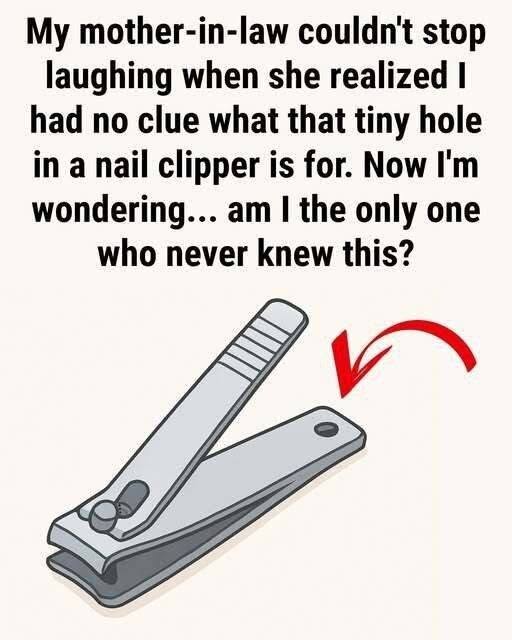
That small round hole on a nail clipper isn’t decorative—it has a few practical, design and manufacturing purposes that still make sense today.
Most nail clippers (like those from common brands such as Zwilling or Revlon) include this feature as part of a simple but clever tool design.
🔧 1. Manufacturing and assembly purpose
During production, the hole helps:
- Hang parts on hooks while being coated, polished, or assembled
- Move large batches efficiently through factory processes
- Keep alignment consistent during stamping and shaping
So originally, it’s mostly a factory efficiency feature.
🔗 2. Keychain or travel attachment
The hole also allows:
- Adding a keyring or chain
- Attaching the clipper to a toiletry bag
- Reducing loss during travel
This is still useful today, especially for portable grooming kits.
🧰 3. Lever or cleaning aid (less common use)
Some people use the hole to:
- Insert a small pin or tool to clean under the blade
- Provide extra grip or leverage when opening the clipper (in older designs)
🧠 4. Design standardization
The hole became part of a standard stamped metal design, so most manufacturers kept it because:
- It doesn’t increase cost
- It doesn’t weaken the structure
- It’s already part of production tooling
🧠 Bottom line
The hole in a nail clipper is mainly a manufacturing and convenience feature that stuck around because it’s simple, cheap, and occasionally useful.
If you want, I can break down other “hidden design features” in everyday objects (like scissors, pens, or USB ports)—some of them are surprisingly clever.