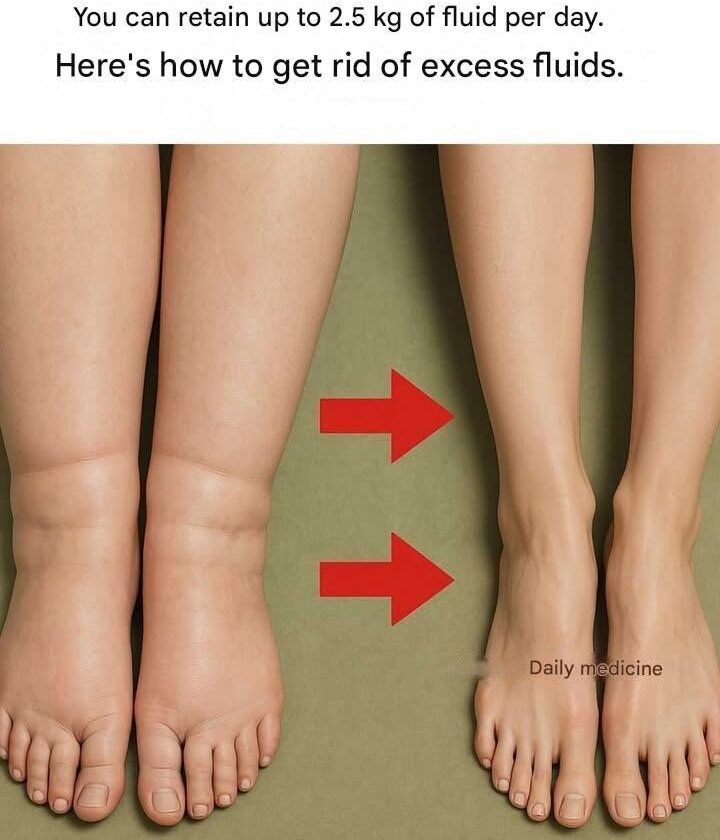
The claim that you can “retain up to 2.5 kg of fluid per day” is often used in weight-loss articles, but it needs context. Your body weight can fluctuate by several pounds (sometimes around 1–3 kg) from day to day because of water shifts, not because you gained or lost that much fat. Common causes include salty meals, carbohydrate intake, hormones, exercise-related inflammation, stress, and changes in hydration.
To reduce temporary water retention safely:
- Drink enough water: Dehydration can encourage your body to hold onto fluid. Aim for regular hydration rather than trying to “flush” your body with excessive water.
- Reduce excess salt: High-sodium foods (processed foods, packaged snacks, fast food) can make your body hold more water.
- Eat potassium-rich foods: Foods such as bananas, beans, leafy greens, potatoes, and yogurt can help balance sodium levels.
- Move regularly: Walking, exercise, and avoiding long periods of sitting can support circulation and reduce swelling.
- Eat enough protein and fiber: Balanced meals can help regulate appetite and digestion, which often affects scale weight.
- Sleep well and manage stress: Poor sleep and stress hormones can influence fluid balance.
Avoid “detox” teas, extreme sweating, or taking diuretics unless prescribed—these usually remove water temporarily and can be unsafe.
If swelling is sudden, severe, one-sided (especially in a leg), associated with shortness of breath, chest pain, or rapid unexplained weight gain, it’s worth seeking medical advice because fluid retention can sometimes signal a health issue.