That claim is exaggerated.
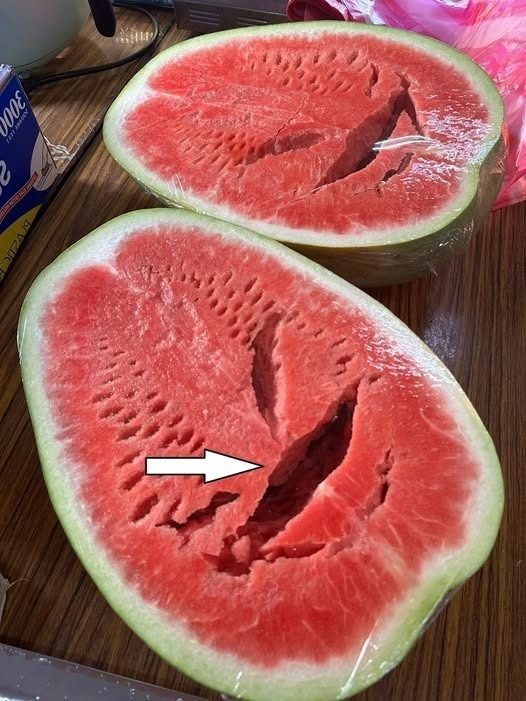
Seeing cracks inside a watermelon doesn’t automatically mean you should stop eating it. In most cases, it’s a growth issue, not a safety warning.
What those cracks usually mean
Internal cracks in watermelon are commonly caused by:
- Rapid growth stress: The fruit grows too quickly due to lots of water or fertilizer, and the flesh splits internally.
- Temperature swings: Hot days and cool nights can stress the fruit while it’s forming.
- Nutrient imbalance (like calcium/boron issues): Affects how the fruit tissue develops.
- Variety traits (especially seedless watermelons): Some are more prone to hollow heart or internal splitting.
This condition is often called “internal cracking” or “hollow heart” in agriculture.
Is it dangerous to eat?
Usually, no.
If the watermelon:
- smells normal
- tastes sweet (or at least normal)
- has no mold or slimy texture
…then it is generally safe to eat, even if it looks cracked inside.
When you should avoid eating it
Don’t eat it if you notice:
- sour or fermented smell
- fizzing or alcohol-like taste (it’s starting to ferment)
- mold (white/green/black spots)
- mushy, watery breakdown of flesh
Those signs indicate spoilage, not just cracking.
Bottom line
Internal cracks look alarming, but they’re usually a farming/growth defect—not a poison warning. The “stop eating immediately!” message is more social media scare than science.
If you want, you can describe what yours looked like and I’ll tell you if it sounds safe or spoiled.