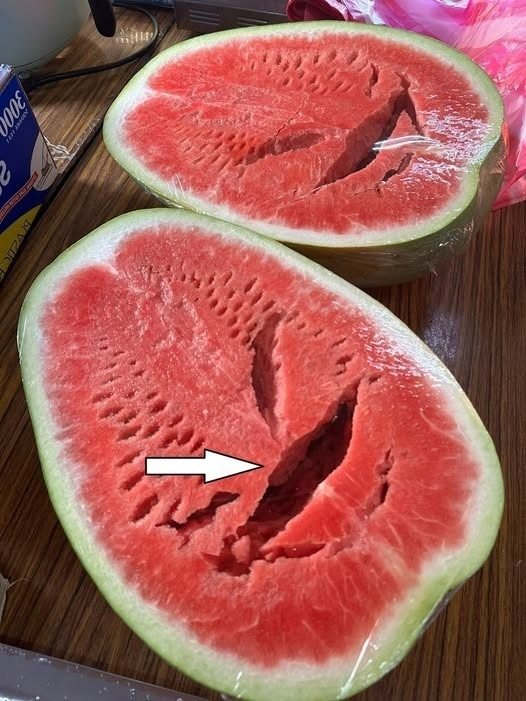
Why a Watermelon May Have Cracks Inside
1. Natural “hollow heart” condition (most common)
Sometimes watermelons develop internal gaps or cracks because of uneven pollination during growth.
What it looks like:
- Cracks or splits inside the flesh
- Hollow spaces in the center
- Irregular texture but normal color
✔ Is it safe?
Usually yes, as long as it smells and tastes normal.
2. Rapid growth due to water fluctuations
If the watermelon receives:
- Heavy rain after dry periods
- Irregular watering during growth
The inside flesh may expand too quickly and crack.
✔ Result:
- Fibrous texture
- Internal splitting
- Sometimes slightly dry or grainy areas
✔ Safety:
Generally safe to eat if it looks and smells fine.
3. Overripe watermelon
When a watermelon is left too long after ripening:
- The flesh can break down internally
- Texture becomes mushy or separated
- Small cracks or voids may appear
✔ Safety:
Safe only if it’s not fermented or spoiled.
4. Disease or decay (rare but important)
In some cases, cracks can be linked to:
- Bacterial or fungal infection
- Internal rot
⚠️ Warning signs:
- Sour or fermented smell
- Slimy texture
- Discoloration (brown, gray, or black patches)
- Gas bubbles or foaming inside
✔ Safety:
Do NOT eat it if these signs are present.
When you SHOULD throw it away immediately
Stop eating the watermelon if you notice:
- Rotten or alcoholic smell
- Slimy or mushy flesh
- Mold anywhere inside
- Bitter or strange taste
- Unusual discoloration
When it is usually safe
You can generally eat it if:
- It smells fresh and sweet
- Texture is normal despite cracks
- No mold or unusual color
- Taste is normal