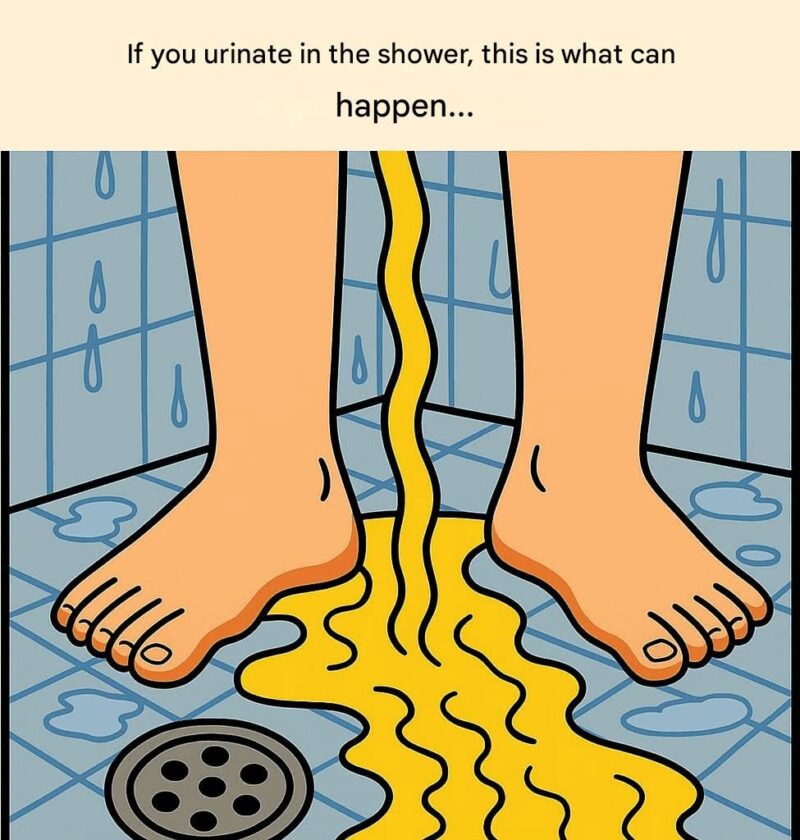
Here’s what actually happens:
1. Urine itself is usually sterile (in healthy people)
Fresh urine from a healthy person is typically low in bacteria. So in that sense, peeing in the shower is not inherently harmful.
2. The real issue is hygiene habits
Problems come more from how it’s done:
- If urine isn’t rinsed away well, it can contribute to odor buildup
- Standing water in the shower can mix with bacteria from skin, feet, and drains
- Poor cleaning habits can allow germs to grow over time
So it’s less about urine itself and more about bathroom hygiene overall.
3. Skin irritation is possible (rare but possible)
If someone has:
- Sensitive skin
- Cuts or shaving irritation
- Frequent exposure without rinsing properly
It may cause mild irritation in some cases.
4. Plumbing concerns (small but real)
In most homes, occasional urine in the shower won’t damage plumbing. However:
- Regular buildup without cleaning can contribute to odors
- Hard water + soap + urine residue can leave film over time
5. Social and behavioral aspect
Most people consider it a habit issue rather than a health one. It’s often discouraged simply for cleanliness norms and bathroom etiquette.
Bottom line
Peeing in the shower is not dangerous in most cases, but it’s also not something that replaces proper toilet hygiene. The main concerns are cleanliness, odor control, and good bathroom habits, not serious health risks.
If you want, I can also break down myths vs facts about other viral hygiene claims like this one—they’re surprisingly common online.