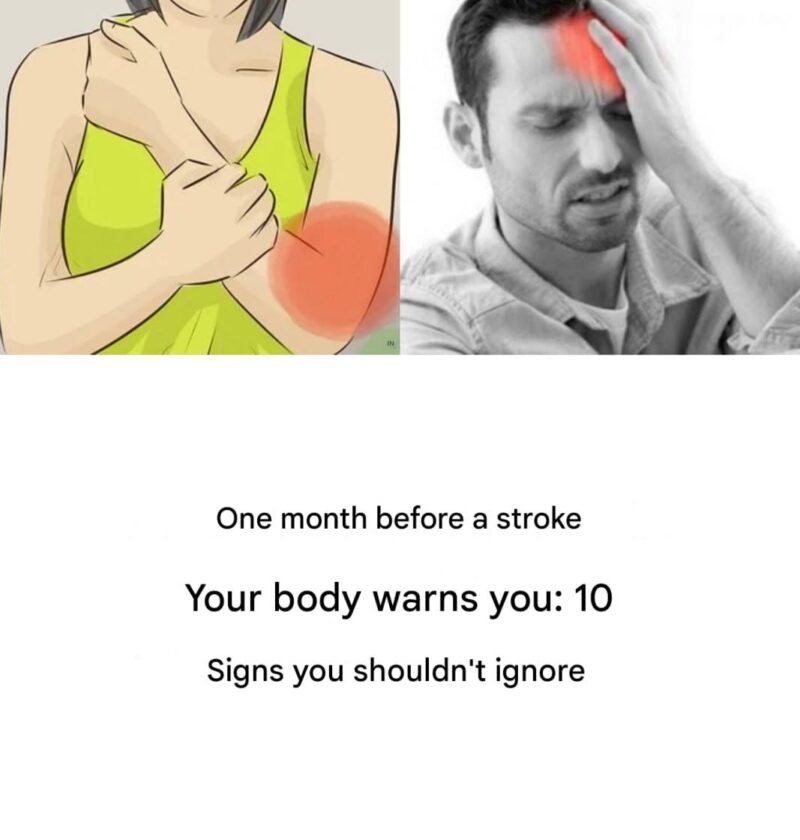
The claim that “your body warns you one month before a stroke” is misleading. A stroke can happen suddenly without warning, and there is no guaranteed one-month countdown. However, some people do experience warning symptoms, especially from a transient ischemic attack (TIA)—sometimes called a “mini-stroke”—which can occur before a major stroke.
A TIA is a medical emergency because it may be a warning sign of a future stroke.
10 warning signs you should not ignore
- Sudden weakness or numbness
- Especially on one side of the face, arm, or leg.
- Drooping on one side of the face
- A smile may appear uneven.
- Speech problems
- Slurred speech, difficulty finding words, or trouble understanding others.
- Sudden vision changes
- Loss of vision, blurred vision, or double vision in one or both eyes.
- Sudden dizziness or loss of balance
- Trouble walking, coordination problems, or feeling unusually unsteady.
- A sudden severe headache
- Especially a “worst headache of your life” that appears without a clear cause.
- Confusion or difficulty thinking clearly
- Sudden changes in awareness or understanding.
- Trouble swallowing
- New difficulty moving food or liquids safely.
- Sudden weakness or clumsiness
- Dropping objects or being unable to use a hand normally.
- Brief episodes that disappear
- Symptoms that last minutes and then resolve can still be a TIA.
Remember FAST
- F — Face: Is one side drooping?
- A — Arms: Can both arms be raised?
- S — Speech: Is speech strange or unclear?
- T — Time: Call emergency services immediately if these occur.
Reducing stroke risk
Helpful steps include:
- Controlling high blood pressure
- Managing diabetes and cholesterol
- Not smoking
- Staying physically active
- Eating a balanced diet
- Taking prescribed medications as directed
If you or someone near you is experiencing sudden stroke symptoms right now, seek emergency medical help immediately—do not wait to see if they improve.