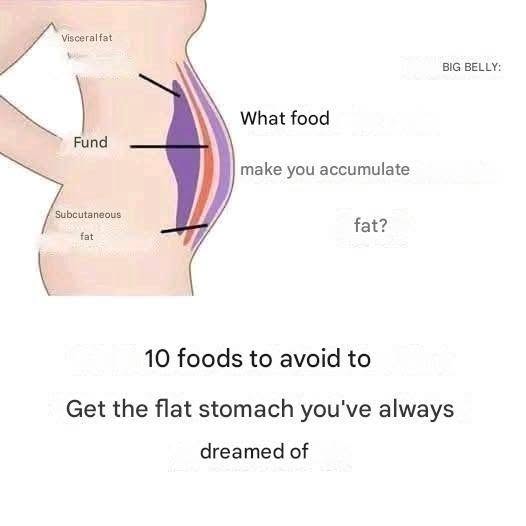
There isn’t a universal list of 10 foods that everyone must avoid to get a flat stomach. Belly fat is influenced by overall eating patterns, physical activity, sleep, stress, and genetics—not one or two specific foods.
That said, limiting these foods and drinks may help if they’re a regular part of your diet:
- Sugar-sweetened beverages (soft drinks, sweetened juices, energy drinks)
- Sugary desserts (cakes, cookies, pastries)
- Highly processed snack foods (chips and similar packaged snacks)
- Refined grains (large amounts of white bread, pastries, and many sugary breakfast cereals)
- Fast food that’s high in calories and low in nutrients
- Processed meats (such as sausages and bacon), especially in large amounts
- Excess alcohol, which can contribute to weight gain
- Large portions of fried foods, which are often high in calories
- Foods that cause you bloating, such as certain beans, dairy, or carbonated drinks if you’re sensitive to them
- Frequent high-calorie, low-nutrient snacks, especially if they replace more nutritious foods
What to eat instead
A diet that supports a healthy waistline typically includes:
- Plenty of vegetables and fruit
- Lean protein (fish, poultry, beans, tofu, eggs)
- Whole grains
- Nuts and seeds in moderate portions
- Healthy fats (such as olive oil and avocado)
For a flatter stomach
If your goal is reducing belly fat, focus on:
- Eating in a sustainable calorie range if weight loss is needed.
- Getting enough protein and fiber.
- Strength training and regular aerobic exercise.
- Sleeping 7–9 hours per night.
- Managing stress.
If your concern is bloating rather than body fat, the foods to limit may be different. If you tell me your age, height, weight, and whether you mean fat or bloating, I can give more specific advice.