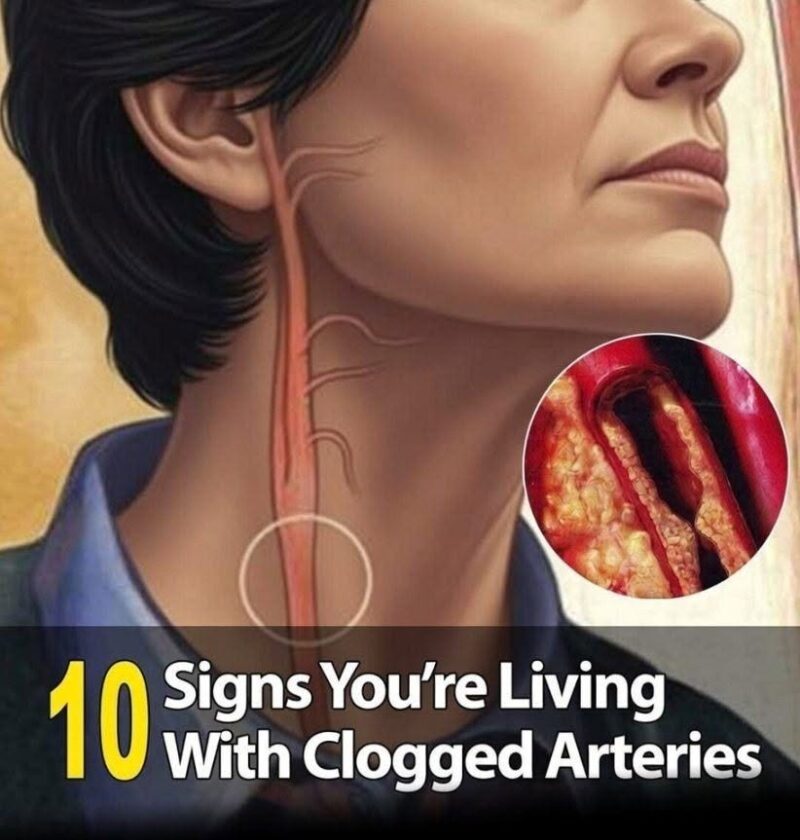
Blocked arteries (also called atherosclerosis) can reduce blood flow to the heart, brain, or limbs. Some people have no symptoms until the blockage becomes severe, while others develop warning signs that should be evaluated.
Here are 10 possible indicators:
- Chest pain or pressure (angina)
A squeezing, tight, or heavy feeling in the chest, especially during physical activity or emotional stress. - Shortness of breath
This may occur if the heart isn’t getting enough blood. - Pain spreading to the arm, neck, jaw, shoulder, or back
This can be a sign of reduced blood flow to the heart, particularly during a heart attack. - Pain in the legs when walking (claudication)
Cramping or aching in the calves, thighs, or buttocks that improves with rest may indicate narrowed arteries in the legs. - Cold feet or legs
Reduced circulation can make one limb feel cooler than the other. - Slow-healing wounds on the feet or legs
Poor blood flow can delay healing. - Numbness or weakness on one side of the body
This can be a warning sign of a stroke if blood flow to the brain is affected. - Sudden vision changes or loss of vision
Can occur if blood flow to the eye or brain is interrupted. - Dizziness or fainting
May have many causes, including reduced blood flow. - Fatigue or reduced exercise tolerance
Feeling unusually tired or unable to do activities you previously could may sometimes be related to heart disease.
Risk factors
Your risk is higher if you have:
- High blood pressure
- High cholesterol
- Diabetes
- Smoking
- Obesity
- A family history of early heart disease
- Physical inactivity
When to seek urgent care
Call your local emergency services immediately if you experience:
- Chest pain lasting more than a few minutes or recurring
- Chest pain with shortness of breath, sweating, nausea, or pain radiating to the arm or jaw
- Sudden weakness, numbness, trouble speaking, or facial drooping
- Sudden loss of vision
Many of these symptoms can have causes other than blocked arteries, but they should not be ignored. If you have ongoing symptoms or significant risk factors, it’s a good idea to discuss them with a healthcare professional, who may recommend tests such as blood work, an electrocardiogram (ECG), or imaging based on your situation.