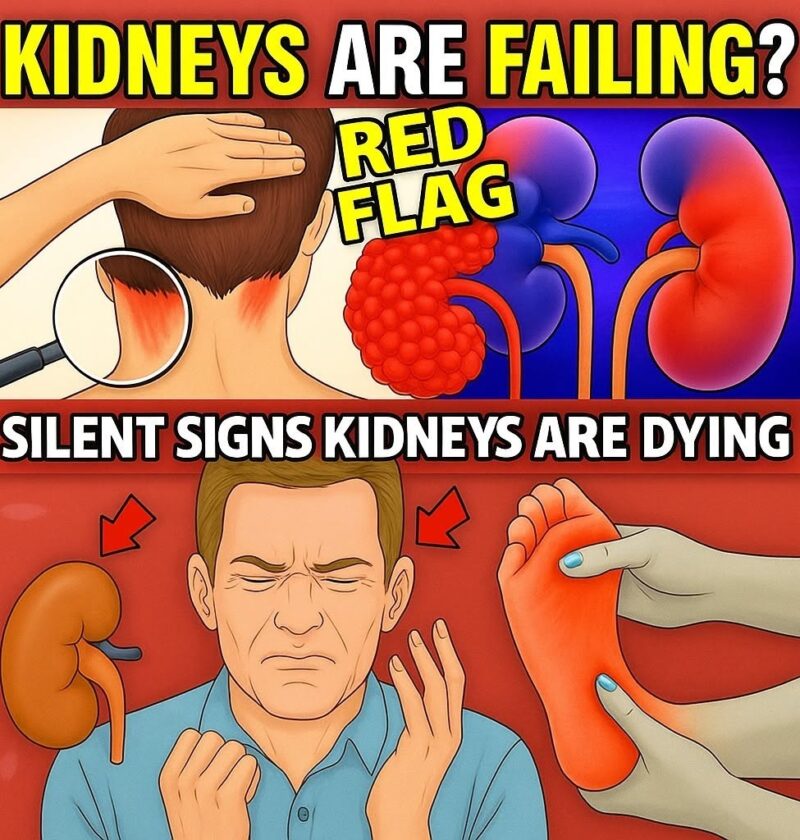
10 Silent Signs Your Kidneys May Not Be Working Properly — Signs Many People Overlook
Your kidneys filter waste and extra fluid from the blood, help control blood pressure, balance minerals, and support healthy red blood cell production. Kidney problems can develop slowly, and early symptoms may be mild or easy to miss.
These signs do not always mean kidney disease, but persistent or unexplained changes should be discussed with a healthcare professional.
1. Changes in Urination
Pay attention to:
- Needing to urinate more often, especially at night
- Producing much less urine than usual
- Changes in urine appearance
2. Swelling in the Feet, Ankles, or Hands
When kidneys do not remove enough fluid, extra fluid may collect and cause swelling (edema).
3. Unusual Tiredness or Weakness
Kidney problems can contribute to anemia and a buildup of waste products in the body, which may lead to fatigue.
4. Foamy or Bubbly Urine
Persistent foam in urine may sometimes be a sign of excess protein loss, which can be associated with kidney damage.
5. Blood in the Urine
Pink, red, or dark urine can have many causes, but it should always be evaluated.
6. Dry, Itchy Skin
Changes in mineral balance and waste buildup can sometimes contribute to persistent itching.
7. Loss of Appetite or Nausea
As kidney function declines, waste products may build up and affect digestion and appetite.
8. Muscle Cramps or Changes in Muscle Function
Kidneys help regulate minerals such as potassium and calcium. Imbalances may contribute to cramps or weakness.
9. Trouble Sleeping or Restlessness
Some people with kidney problems experience sleep difficulties due to discomfort, itching, or changes in body chemistry.
10. High Blood Pressure That Is Difficult to Control
Kidneys play an important role in blood pressure regulation. Kidney disease and high blood pressure can also worsen each other.
Who Has a Higher Risk of Kidney Disease?
Risk is higher for people with:
- Diabetes
- High blood pressure
- Heart disease
- A family history of kidney disease
- Older age
- Long-term use of certain pain medicines